Who are Cape Town’s new collectors and artists — and how are they changing the game? Their strategies reveal how the landscape has shifted for artists and galleries alike, and major institutions are taking note of this ongoing evolution.
Artists and Collectors
JC Bolke and Rudo Van Den Berg are a collector couple who both accumulate and create art of their own. For them, Cape Town’s new collector map begins on a phone, passes through First Thursdays, and lands in a gallery back room.
“The main source is social media,” they say. “Artists aren’t only artists; they’re also social media influencers of a kind.”
Instagram and TikTok spark the first point of contact, usually; Facebook, they add, “hits a broader scope.”
Discovery continues beyond the screen: “You see upcoming exhibitions on socials and then go to gallery openings and First Thursdays. From there, you gather who the artists are to collect.”
They’re refreshingly candid about how young buyers strike a balance between love and value: “Most who start out don’t have the finances for big names yet. They look for a mid-ground: affordable, liveable, and likely to grow.”
And galleries? Still crucial.
“Buying from a gallery gives a sense of security. If a gallery you trust represents an artist, it signals someone to keep an eye on.”
At the same time, they recognise the temptation to go direct: “People go around galleries and buy from the artist,” they note, while stressing the importance of price discipline.
In a nutshell, JC and Rudo embody the new world etiquette: discover everywhere, validate through a trusted gallery, and help maintain the integrity of the ecosystem.
The Tales of Fresh Talent
In Cape Town’s emerging scene, “fresh talent” has had to skirt the line between staying true to oneself and selling enough artworks to sustain a living. Young artists are learning to navigate the commercial world without compromising their convictions.
Amber Skye Alcock sells “80–90 per cent” of her work through social media and email, but that reach cuts both ways. “I started catering to my collectors too much… betraying my own artistic integrity,” she admits. “I knew what would sell and what was commercial. I’d sit at a canvas thinking, ‘I want to do this, but it’s too dark and won’t sell.’”
Amber also names a tension many Cape Town artists whisper about: “Galleries expect a traditional, even ‘mysterious’ artist. Social media is the opposite, as in you need to show your process.”
Locally, she’s felt that some galleries view a large following as a liability; abroad, it’s an asset. “Overseas, my following helped me. They trust me more; I’ve gotten opportunities because my personality is obvious on Instagram.”
Kyle Jardine sees the influence flowing both ways. “I create from my own inspirations. That type of uniqueness caught collectors’ eyes and created demand.”
He’s candid about trend pressures but tries to stay grounded: “What’s worked is remaining true to my narrative through my journey from theatre to canvas.”
Cassian Robbertze prefers an inner compass. “I try to ensure collectors’ tastes have little to no influence,” he says, while acknowledging there’s always something to learn from conversations.
He understands the market’s rhythms — “There are pieces I know probably won’t sell and others that might” — but refuses to let that dictate the work.
His take on young collectors is heartening: “They tend to purchase because they genuinely connect. Investment comes up, but the deciding factor is whether they like the piece.”
Hannah Macfarlane sits at the nexus of fine art and craft, working in wet-felted wool. Historically, textiles have been undervalued, but she’s busy changing that.
To widen the circle, she created Flaccid Flower, an installation of smaller, lower price-point pieces as an “entry point” for new audiences. From there, collectors step into her larger sculptural world.
She’s honest about the tug-of-war: “Textile is labour-intensive and still priced lower than many mediums. I’ve considered switching, but I want to uplift and change the perspective of ‘craft’ art.”
Her hope for the next decade is radical and straightforward: “More connection. A relationship that’s fostered, not just an investment.”
Together, these voices come to explain the new artist-collector-contract requirements: visibility demands vulnerability, and a direct message requires more due diligence.
Institutions and Big Investors
Cape Town’s art ecosystem remains anchored by institutions that lend heft, history, and a broader public.
Caroline Greyling, Museum Director at the Norval Foundation, puts it plainly: “Cape Town offers world-class infrastructure for museums, galleries, and resident artists. For international collectors, it’s an entryway into South African and African artists; for locals, it’s a cultural home.”
She salutes leading galleries such as Everard Read, Southern Guild, and Goodman Gallery as platforms where collectors “engage with South African, continental, and international talent.”
The city’s museums, such as Norval Foundation, Zeitz MOCAA, Iziko, the Irma Stern Museum, and Rupert Museum, create “hotspots for learning and appreciation.”
If museums set the stage, corporate collections once set the pace, but that era has cooled down since its heyday.
Stefan Hundt, Curator of the Sanlam Art Collection, outlines the shift with bracing clarity. Corporates, he says, are not museums; they’re private collections owned by boards and shareholders.
In the past, buying was easier: art was cheaper, stakeholder expectations looser. “Prices have skyrocketed,” he notes, and corporate priorities have tightened. Storage, insurance, VAT/CGT, and governance make art a hard investment case.
Many corporations now collect funds through foundations or specialised marketing vehicles, with acquisitions often guided by independent panels. Museums’ buying budgets have also thinned, making loan partnerships, gallery collaborations, and private collectors more vital than ever.
His practical counsel to artists remains old-school: “You really do need a good agent or gallery. You can’t spend all your time marketing when you’re supposed to be producing.”
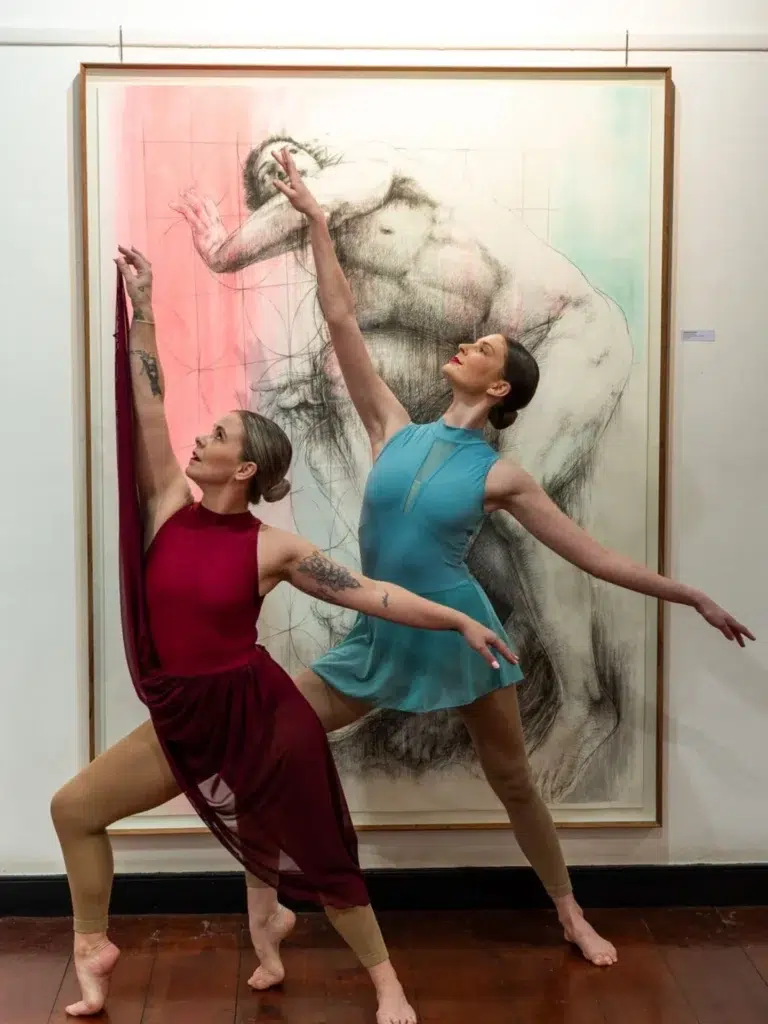
From the gallery side, Donavan Mynhardt, the Curator of Rust-en-Vrede Gallery + Clay Museum describes a city spoiled for choice. “Cape Town has a vibrant creative community and a large pool of artists in a variety of styles and mediums. Collectors can visit several studios or galleries in a short time.”
He sees younger buyers leaning into digital discovery through a global marketplace, but his own collecting ethos is a useful counterweight: “I don’t consider investment potential. I have works that appreciated, but that’s not my focus.”
Jaret Loggenberg, Artist and Managing Director at The Artists Gallery, says Cape Town works because it pairs access and quality. It’s the mix of art, food, wine, and a rich cultural heritage, plus the chance to meet artists directly, hear their stories, and find accessible and outstanding work.
“Younger collectors,” she notes, “are bringing a noticeable shift to both the local and international art market. They are often more open to discovering emerging artists rather than focusing solely on established names, which creates new opportunities for talent to gain recognition.”
So What Does This Entail?
Read together, these perspectives show how museums provide context and continuity. How galleries educate, vet, place, and price. How corporations collect selectively and lend reach. And how new private collectors can maintain their flow between studios, fairs, and institutions.
The new collectors haven’t broken the mould — they’ve simply updated their tools.
The ones who’ll “win” will be the ones who stay close to artists, galleries, institutions, and the city itself. In Cape Town, value is still created through conversation, whether it’s online or in person.