

Hermès may be best known for its leather craftsmanship and silk scarves. Over the past two decades, however, the Parisian maison has steadily built a reputation for watchmaking that is both technically ambitious and unmistakably poetic. During a recent visit to Cape Town, I was offered a glimpse into this distinctive horological philosophy while admiring a selection of Hermès timepieces now available at Picot & Moss BHH Boutiques in Cape Town and Johannesburg.
“For us, watches are one part of a much larger universe,” explained Hermès Horloger creative director Philippe Delhotal. As a house of craftsmanship incorporating 16 métiers — from leather and ready-to-wear to jewellery and watches — Hermès approaches horology differently from many traditional Swiss brands. “The objective is to make a difference in the industry and attract collectors with something singular.”
That philosophy has translated into notable recognition from the watch industry. Since 2011, Hermès has earned multiple accolades at the prestigious Grand Prix d’Horlogerie de Genève (GPHG), often for timepieces that approach complications from an unexpected angle rather than following conventional watchmaking formulas.


A defining example is the Le Temps Suspendu (Time Suspended) complication, first introduced in 2011 within the Arceau collection. At the press of a button, the watch momentarily stops displaying the time: the hands withdraw from the dial, while the movement continues to run beneath the surface.


The concept was revived recently in the Hermès Cut, a contemporary 39mm model whose sculptural case design — defined by a distinctive lateral “cut” — houses the updated complication. When the button at eight o’clock is pressed, the display disappears, only to return instantly to the correct time when the wearer chooses.
“It’s a very poetic idea,” said Philippe. “Time is the most precious thing we have, but we often take it for granted. With this watch, you can decide to step away from it — and return whenever you wish.”


Hermès has also explored more traditional complications, though always with its own twist. The Slim d’Hermès GMT, for example, houses an ultra-thin movement measuring just 2.6mm, while the dial arranges its indications with subtle asymmetry — the second time zone positioned at 10 o’clock, and the date at six.
Other creations venture even further into horological storytelling. The Arceau L’Heure de la Lune, introduced in 2019, features twin satellites that display time and date alongside dual moon phases for the northern and southern hemispheres. The dial itself is crafted from extraterrestrial materials, including lunar and Martian meteorites. As the display progresses, the surface appears subtly different each day, reflecting the Earth’s position in relation to the moon. The piece earned another GPHG award in the year it was introduced.


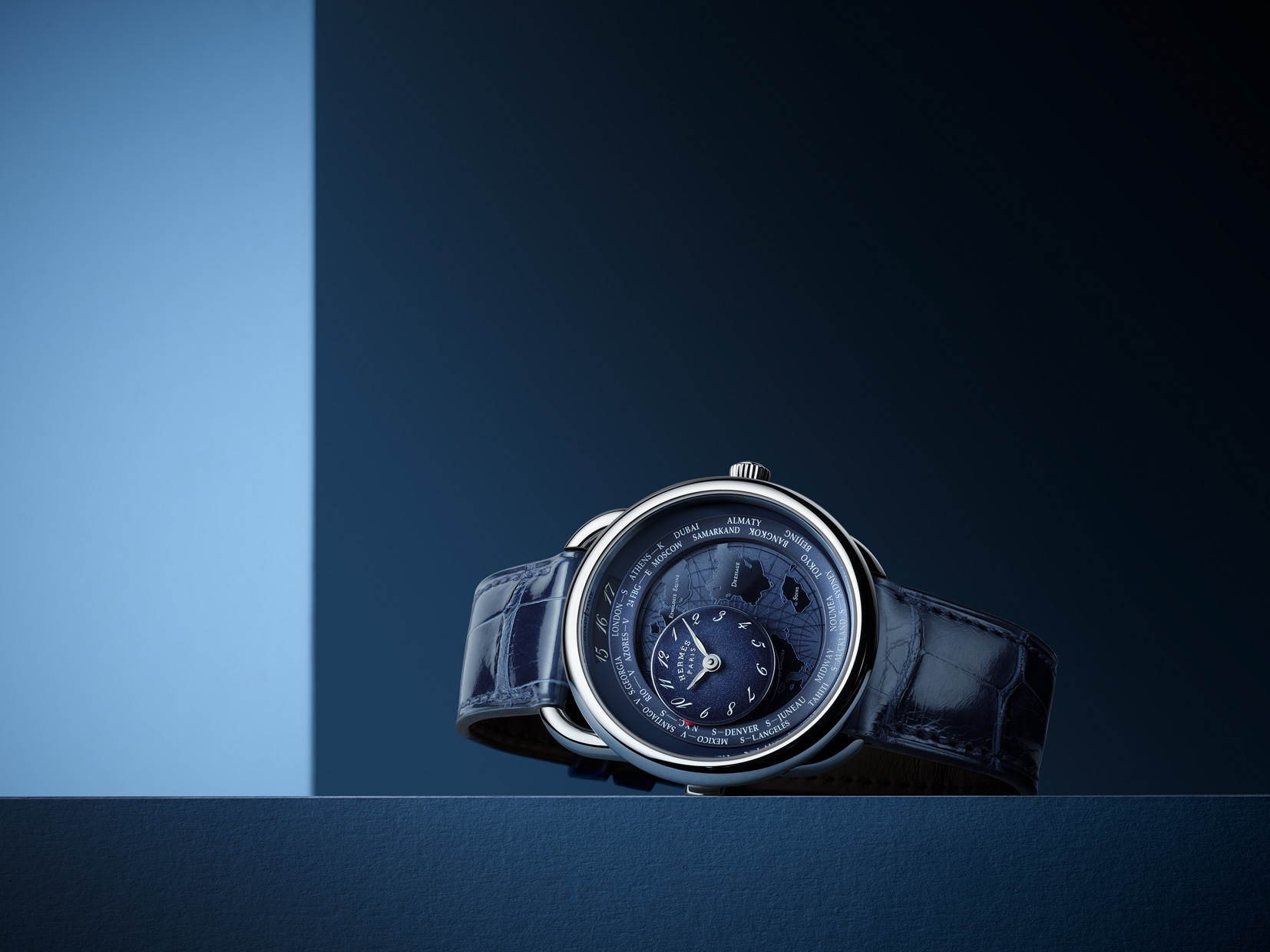
Similarly inventive is the Arceau Le Temps Voyageur, launched in 2022, which offers a refined interpretation of the world timer. Cities appear around a rotating satellite display, allowing the wearer to synchronise local time and track a second time zone with ease — a complication presented with Hermès’ characteristic clarity.
Behind Hermès’ watchmaking sits a strong technical base. The maison works closely with Vaucher Manufacture Fleurier, in which it holds a 25 per cent stake. This partnership provides Hermès with access to high-level mechanical development while allowing the brand to focus on its distinctive design language.
While complications appeal strongly to collectors, Hermès also brings its jewellery heritage to watchmaking — a connection particularly evident in the Faubourg pieces now in South Africa. Named after the maison’s historic Paris address at 24 Rue du Faubourg Saint-Honoré, the watch was first introduced in 2014 and is usually reserved for Hermès boutiques.

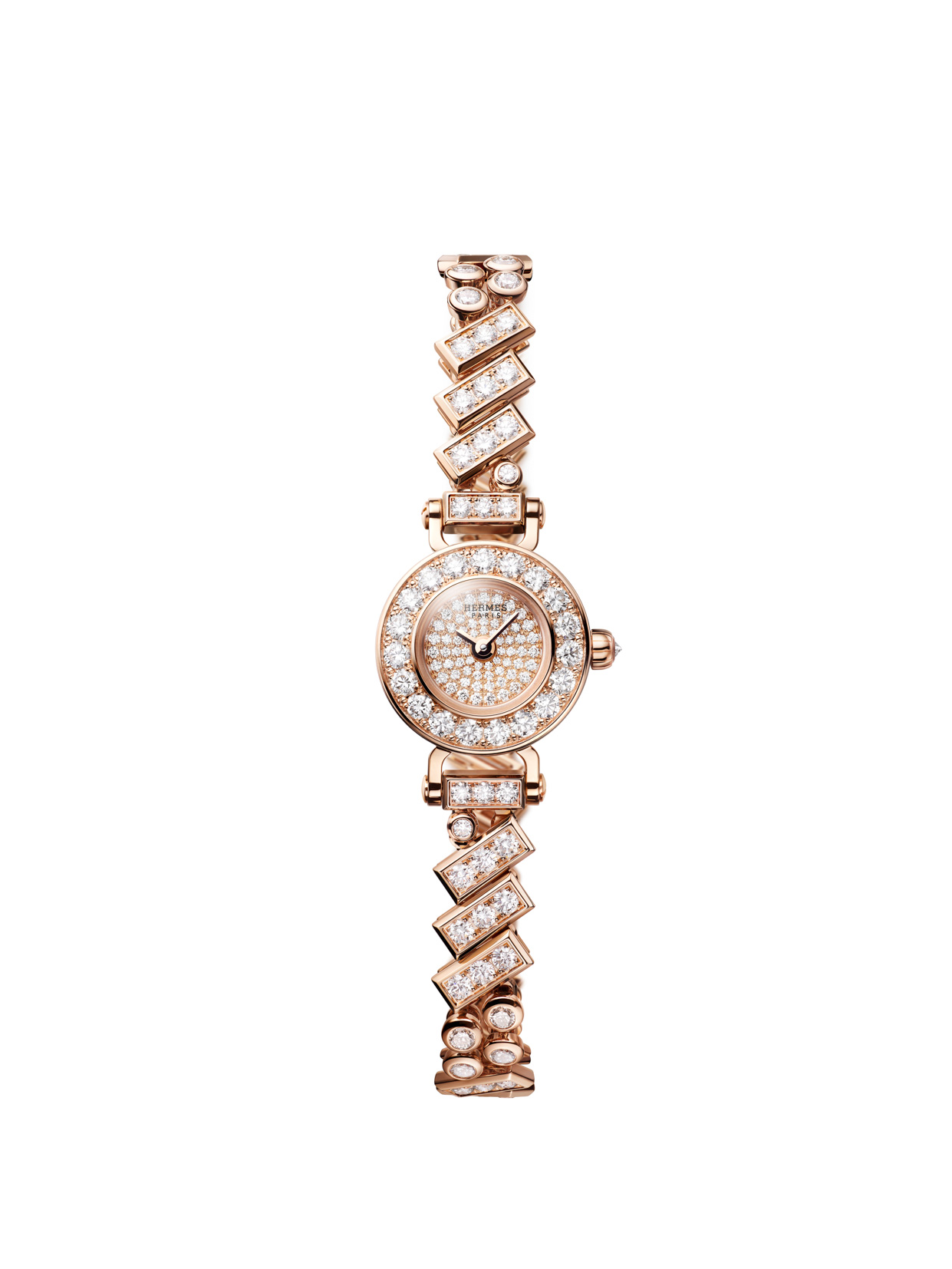
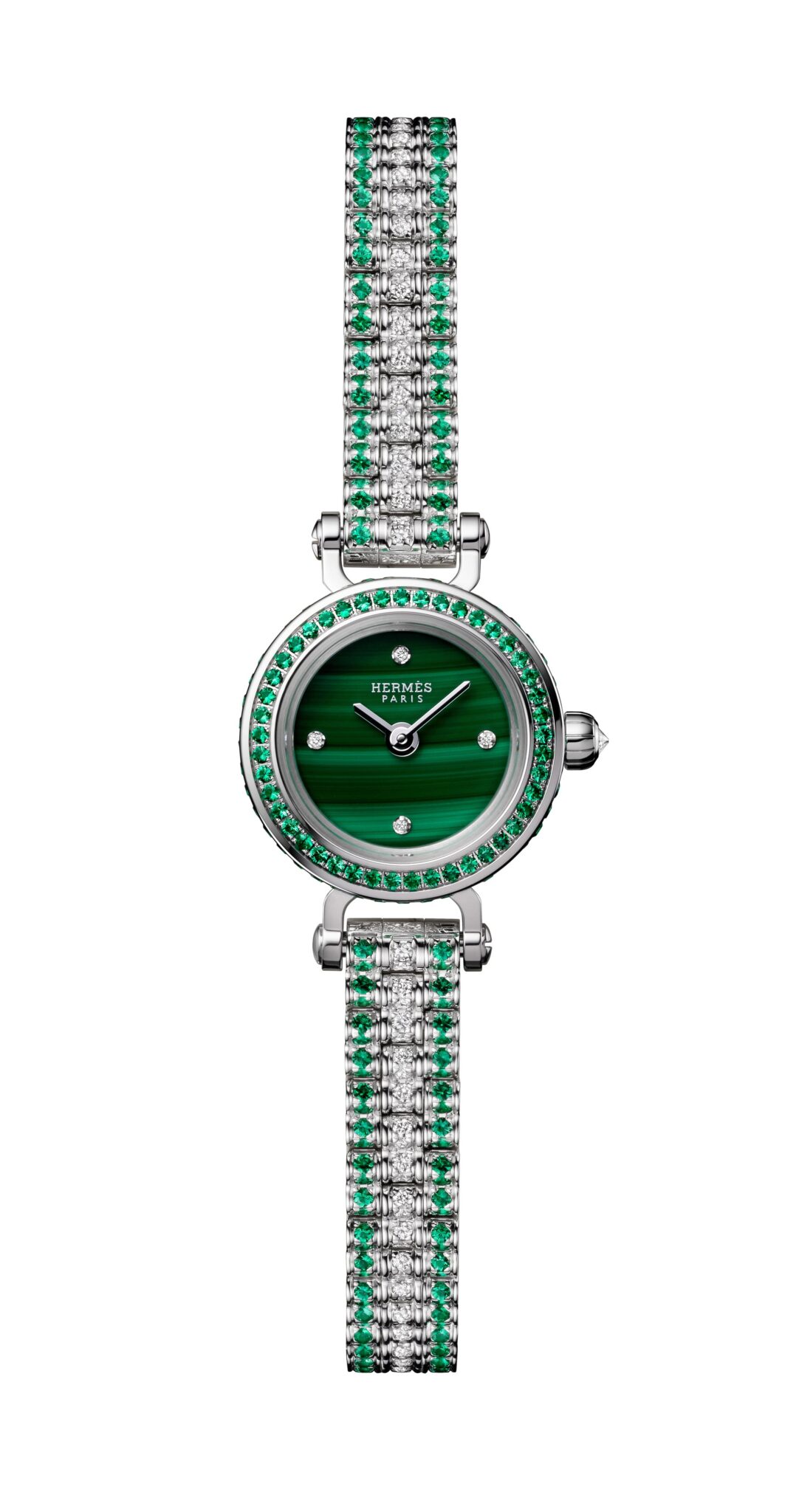
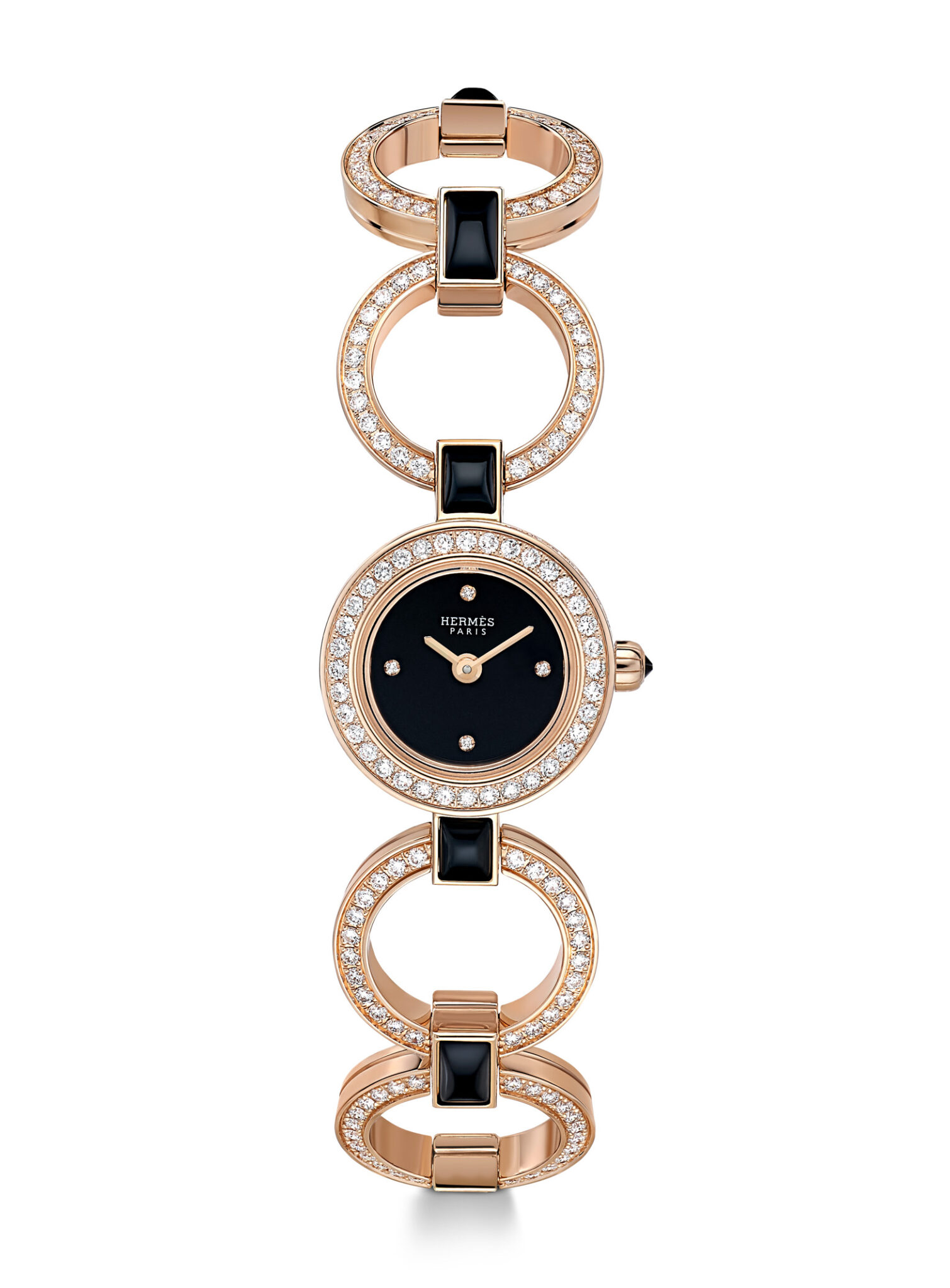
Measuring just 15mm in diameter, the Faubourg is closer to a jewel than a traditional wristwatch. It is rare to see these pieces offered through an external multi-brand partner.
Several variations showcase Hermès’ mastery of gem-setting and decorative craftsmanship. One version pairs a malachite dial with a case ring set with emeralds and diamonds — a striking composition in which gemstones encircle the dial rather than form a traditional bezel. Another model features aventurine, whose deep-blue surface sparkles under light like a night sky.

The most spectacular pieces move firmly into high jewellery territory. Within the jewellery watch segment, the Faubourg Polka bracelet watch represents the most elaborate interpretation of the collection. Baguette-cut diamonds are set across a supple gold bracelet, giving the piece the presence of a high-jewellery creation rather than a conventional watch. It contains around 44 grams of gold and more than four carats of diamonds.
Other versions feature onyx or gemstone dials paired with rose, white, or, more unusually for Hermès watches, yellow gold. The bracelets are designed to remain exceptionally light and flexible, ensuring that the pieces retain the elegance of fine jewellery.
This blend of craft disciplines is part of the maison’s enduring appeal. “Quality, exclusivity, and design are central to what we do,” said Philippe. “We take our time, and craftsmanship is present in everything.”
The release of these watches to the South African market reflects Hermès’ growing interest in engaging directly with collectors and enthusiasts, building long-term relationships rather than concluding quick transactions. Visitors to the boutiques can now encounter a different side of the Hermès universe, where watchmaking sits alongside jewellery, craftsmanship remains central, and time itself is sometimes treated with a touch of poetry.


