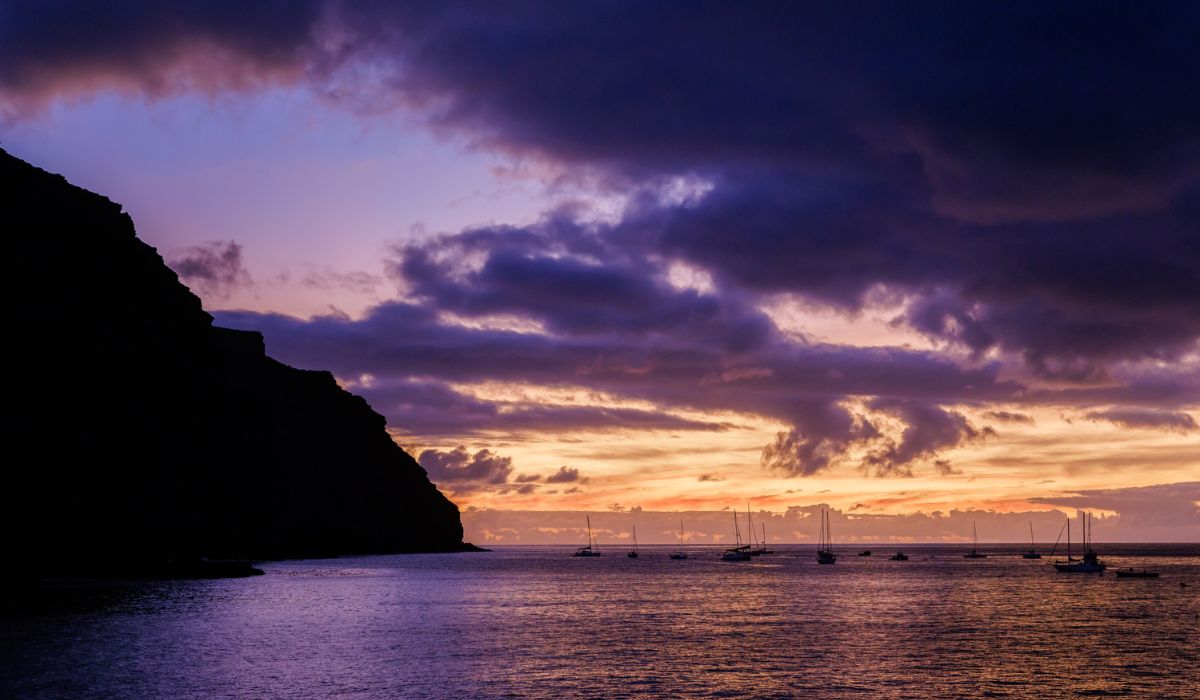
Six hours from Johannesburg and a world away from conventional island escapes, St Helena rewards travellers with dramatic landscapes, rich history, and extraordinary marine encounters.
Different Flavours of Island Luxuries

For anyone who has already experienced the established Indian Ocean and Caribbean circuits, St Helena is in a league of its own. It doesn’t rely on large resorts, private beach clubs, or a familiar template of high-end island hospitality to impress.
Matthew Joshua, owner of Travel Designer St Helena (DMC), says: “While you won’t find gold taps and a butler service on St Helena, the island certainly embodies this new definition of luxury. Here, visitors enjoy open spaces, uncrowded landscapes, remarkable history, extraordinary wildlife, and a sense of discovery that is becoming harder to find.”
That pretty much sums up most of St Helena’s appeal. The global luxury traveller wants something different to whet their appetite, and privacy, safety, time, personal connection, and a lower-impact way of travelling now matter as much as conventional comfort.
St Helena fits quite snugly in that regard, as the island is safe, quiet, and culturally distinct from anything else you’ve tried out at this stage. Visitors can move between heritage sites, hiking routes, local restaurants, and marine excursions without the pressure of crowds or over-programmed itineraries.
Remote but Reachable
Access to this island has improved over the years, but not to the point where anyone could claim it was easy-peasy. Airlink operates scheduled flights between Johannesburg and St Helena, giving the island a reliable connection to Southern Africa while preserving the sense that a trip here must be planned properly. That is part of the attraction; St Helena rewards travellers who stay longer and engage more deeply, rather than those constantly chasing the next tropical getaway.
Jamestown (the island’s capital) is the best starting point. Built in a narrow valley between steep volcanic cliffs, it has Georgian architecture, a working harbour, small shops, the Museum of St Helena and Jacob’s Ladder, the 699-step staircase that rises sharply above town. Mantis St Helena, housed in a restored historic building in Jamestown, gives visitors a boutique base close to the island’s civic and cultural life.
History has always been one of St Helena’s strongest assets, which probably won’t be changing anytime soon. Napoleon Bonaparte’s exile and death on the island are core attractions, with Longwood House among the key sites for visitors.
Yet the island’s story claims to be even broader than Napoleon’s, a vast claim it is happy to back up with plenty of receipts. Its past includes the East India Company, maritime trade, military fortifications, the Anglo-Boer War, and the island’s role in suppressing the transatlantic slave trade. For any culturally curious travellers reading this, St Helena has a depth that most other beach-led island destinations can only hope to match.
Lush Landscapes and Marine Encounters

The natural environment is an important part of St Helena’s landscapes, which change quickly over short distances. Blink, and you’ll miss the shift from dry coastal cliffs to green central highlands, cloud forests, pastureland, and volcanic ridges.
The island’s Post Box Walks are a structured way to experience this variety, as these marked trails were developed to encourage your appreciation of the island’s natural environment and range from short routes to more demanding hikes, often ending at visually resplendent viewpoints or remote coastal sites.
It’s a treasure trove for anyone who prefers active days over passive resort lounging.
The marine offering is one of the island’s main reasons to travel now. Between January and April, whale sharks visit St Helena’s waters, creating the possibility of swimming with the world’s largest fish in a setting that is still carefully managed and relatively uncrowded. Joshua says this is often the experience that leaves the strongest impression on visitors. The wider marine environment also supports diving, snorkelling, dolphin encounters, birding, and boat trips, making the ocean a central part of the island’s high-value tourism future.
Slowly, With Substance

This island, in particular, is positioned quite well for the incoming swell of slow travel. All over the globe, affluent travellers are hungering for journeys that feel purposeful, with fewer stops, longer stays, stronger local engagement, and a clearer sense of where their money goes.
On St Helena, the rate of tourism growth is held in check by accommodation options, flight frequency, and the community’s own interest in protecting what makes the island distinctive. Joshua says: “The island’s remoteness, limited accommodation capacity, careful planning, and strong commitment to conservation naturally support sustainable, organic growth. Local businesses, government, and the community recognise that St Helena’s greatest asset is its authenticity.”
If all goes well, St Helena is unlikely to become a mass-market destination, as its strongest positioning is as a niche, high-value island for travellers interested in nature, history, walking, and marine life. That type of appeal is not universal, and travellers expecting a polished resort infrastructure may find it too quiet, hopefully leaving more room for those who don’t.
The Future of a Niche Island Destination

St Helena is a reminder to all of us that exclusivity does not always come from price or design, but sometimes from distance, limited access, and the absence of crowds. Here, it might mean walking through landscapes where endemic plants still survive, swimming in clear South Atlantic water, interacting with people whose families have lived on the island for generations, or learning the island’s history in the place where it happened.
The island’s future will depend on balancing the challenge of improving service standards without sacrificing the qualities that make it distinctive. If it can achieve that balance, St Helena may remain one of the most distinctive destinations connected to Southern Africa.