

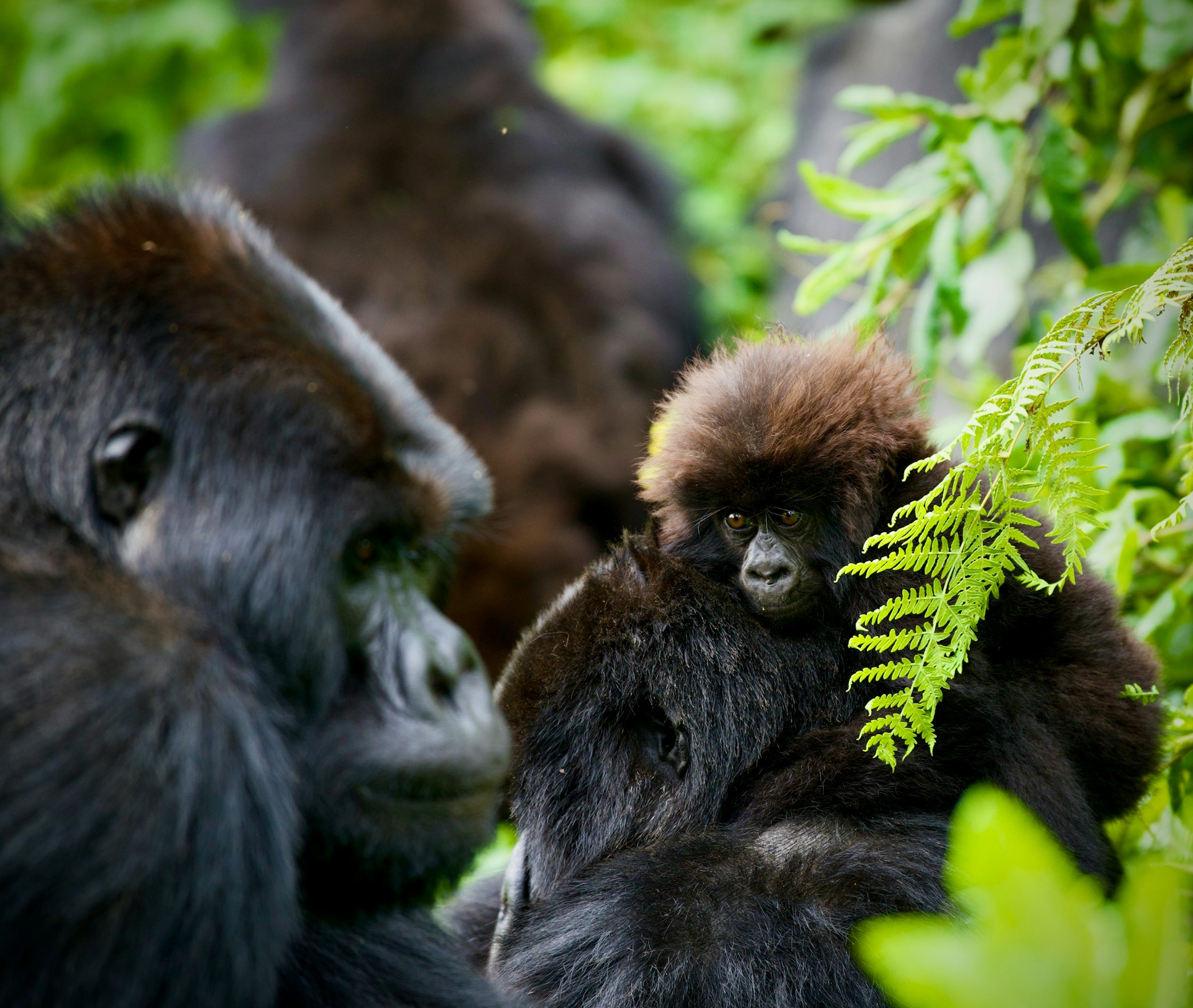
Mist clings to the volcanic slopes of Rwanda’s Volcanoes National Park, drifting between bamboo and giant lobelias. A silverback steps forward, and you have to remind yourself to not meet his gaze.
You are allowed to stay here for one hour — no more.
And that hour comes at a hefty price. At USD 1 500 per permit (for international travellers coming from outside of Africa), Rwanda’s gorilla trekking experience is among the most expensive wildlife encounters in Africa. Yet demand has surged. In early 2025, bookings reportedly rose by more than 50 per cent, challenging the long-held assumption that price deters travellers. Instead, Rwanda’s approach exemplifies a model of luxury conservation tourism where exclusivity is part of the design.
The Price and the Paradox
Compared with neighbouring Uganda, where permits cost nearly half as much, Rwanda’s pricing can appear prohibitive. Daily permits are tightly capped, group sizes are small, and trekking protocols are rigorously enforced.
Rwanda’s national parks deliberately limit visitor numbers to protect the gorillas’ health, well-being, and natural behaviour. By restricting access, demand remains consistently high, and while fewer people are allowed in, those who go tend to be deeply invested in the experience.
According to operators working closely with high-end travellers, the price itself is rarely the deciding factor. “Most of our clients do not view the permit cost as a barrier,” saysAimable Imanirakiza of Primates Africa. “They see it as part of the value proposition, an assurance of quality, ethics, and conservation impact.”
That value is tangible. Through the Rwanda Development Board, a percentage of national park tourism revenue is allocated directly to community development, funding schools, health centres, water projects, and livelihood initiatives around Volcanoes National Park. The remainder supports conservation efforts, ranger welfare, anti-poaching programmes, and habitat protection.
Growing the Gorilla Trek
Once a rugged, standalone activity, gorilla trekking in Rwanda has been transformed by a new generation of lodges that frame the encounter as part of a fully curated journey. Properties such as One&Only Gorilla’s Nest, Singita Kwitonda Lodge, and Wilderness Bisate have reshaped the definition of luxury in one of Africa’s most sensitive landscapes.
Bisate Lodge, in particular, marked a turning point. “Our investment moved the market,” says Manzi Kayihura, Executive Director of Wilderness Rwanda. “At the time, there was scepticism about whether Rwanda could sustain this level of luxury at the intended price point. Bisate has since become our most successful product launch and stimulated wider investment across the sector.”
Singita’s approach reinforces this shift. As a conservation-centred ecotourism brand, it positions nature not as a backdrop, but as the foundation of the guest experience. Conservation informs everything from wildlife encounters to food, wellness, and design, making sure that luxury enhances — rather than overshadows — the environment guests have come to experience.
This subtle recalibration means that Gorilla trekking is no longer the sole headline; it is the emotional core of a broader, more carefully designed safari.
Why Are People Willing to Pay?
“Travellers are motivated by exclusivity, safety, and quality,” says Aimable. “They expect not just a wildlife encounter, but a seamless, premium journey.”
Volcanoes Safaris echoes this sentiment. “Clients choosing Rwanda are generally seeking a refined, well-curated experience,” says Beda Yattee. “The gorilla trek is one element of a broader luxury safari, rather than a standalone activity.”
Singita adds an important layer to this motivation. “People are increasingly discerning about how, why, and where they travel,” notes Inge Kotze, General Manager of Conservation at Singita. “For many, it needs to have more depth than simply a holiday.”
This shift reflects broader global concerns, including climate awareness, conservation urgency, and a growing desire for purposeful travel. Family travel also plays a role, with parents seeking experiences that offer both meaning and lasting memories. In this context, the premium price tag does not diminish the experience; it heightens emotional investment. Guests arrive informed, intentional, and conscious of their impact.
Conservation Working Its Magic
“Tourism creates the justification for large tracts of land to remain wild,” explains Manzi. When executed thoughtfully, high-value, low-volume tourism protects ecosystems while ensuring communities benefit directly. Rwanda’s ecologically fragile landscapes leave little margin for error, making restraint not just ethical, but essential.
Gorilla trekking illustrates this balance. Visitor numbers are capped, every group is briefed on strict protocols, and education is central to the experience. As a result, Rwanda has demonstrated that high-demand wildlife tourism can be managed without compromising a vulnerable species.
Mountain gorilla populations have stabilised and grown over recent decades, with tourism revenue playing a crucial role in their protection. It is a model increasingly cited as a case study for how conservation and luxury can coexist peacefully.
Why Now?
The timing of Rwanda’s gorilla boom is no coincidence. While safari travel is surging globally, Rwanda has taken deliberate steps to broaden access without diluting impact. The country now offers visa-free entry for travellers from all African nations, reinforcing its position as one of the continent’s most open destinations — even as access to sensitive wildlife experiences remains tightly controlled.
Rwanda is also signalling that its conservation-led luxury model extends beyond gorillas. The opening of Wilderness Magashi Peninsula in Akagera National Park in September 2025 points to a future where high-end, low-impact tourism supports diverse ecosystems, from rainforest to savannah.
Rwanda’s USD 1 500 gorilla experience challenges long-held assumptions about luxury travel in Africa. By limiting numbers and raising prices, the country has created an encounter that feels earned — ethically, emotionally, and experientially.
The question, then, is not whether the experience is worth USD 1 500, but whether this model represents the future of conservation tourism across the continent.

Planning Your Rwanda Gorilla Trekking Experience
Gorilla Trekking Permits
Permits cost USD 1 500 per person and allow one hour with a habituated gorilla family in Volcanoes National Park. Numbers are strictly limited, and permits often sell out several months in advance, particularly during peak seasons.
Permits are issued by the Rwanda Development Board and are typically secured through licensed tour operators or luxury lodges as part of a tailored itinerary.
Where To Stay
Luxury lodges near Volcanoes National Park include:
- One&Only Gorilla’s Nest — Contemporary forest luxury with a strong focus on wellness
- Singita Kwitonda Lodge — Ultra-luxury suites rooted in conservation
- Wilderness Bisate Lodge — Astounding architecture with an elegant ethos
How To Book
Most travellers arrange gorilla trekking through specialist operators and lodge partners such as:


