

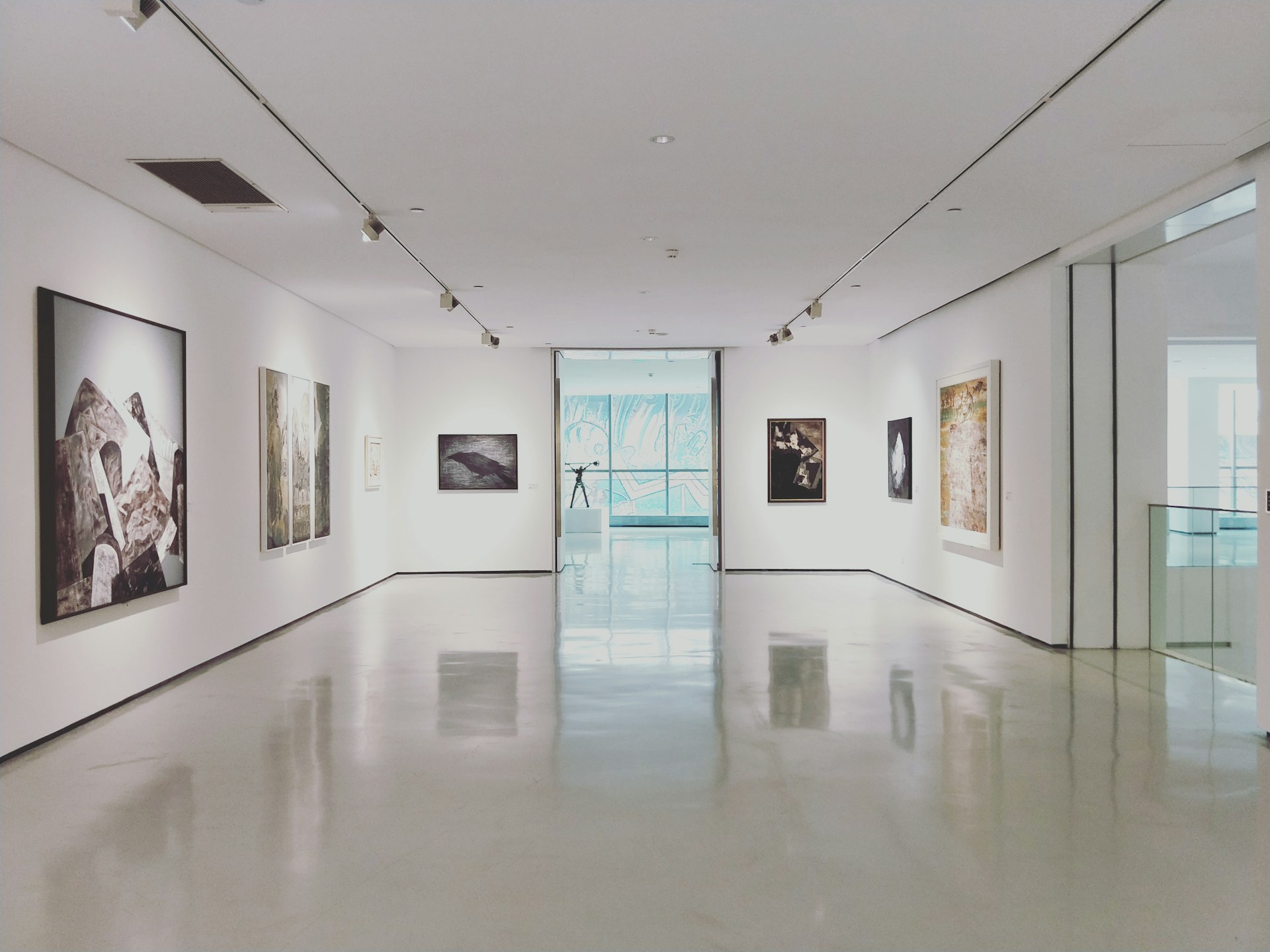

Art is one of the only investments you can hang on the wall, insure for a fortune, and still argue about over dinner. It doesn’t pay a dividend, it doesn’t compound neatly in a spreadsheet, and it certainly doesn’t care about your Sharpe ratio. Yet, quietly, it has created, and destroyed, more discreet wealth than most asset classes would care to admit.
The seductive part of investing in art is the mythology – that you spotted a Basquiat before he was Basquiat. That you bought a Hockney when property began to feel exhausting. That you once stood in front of a Gerhard Richter, hesitated, and now use the word regret as punctuation.
Myth, Money and the Art of Timing
Charles Saatchi famously paid around $14 000 for Damien Hirst’s sculpture The Physical Impossibility of Death in the Mind of Someone Living – a tiger shark in formaldehyde that became the poster child for ’90s British art. When it was later sold to a hedge fund billionaire for a reported $12 million, the message to the market was clear: contemporary art had arrived as an asset class.
But here’s the part often glossed over in trendy coffee table books: plenty of Saatchi’s other bets went nowhere. For every Hirst, there were five artists who dissolved into obscurity, their works now circling the lower floors of auction houses with reserve prices no one dares acknowledge.
Art is a market where timing, taste, narrative, and access matter more than balance sheets. The best investors understand that they’re not buying a painting, but a position in cultural history. And history, inconveniently, is written by curators, critics, institutions… and occasionally TikTok.
When Culture Reprices Value
A perfect case in point is Jean-Michel Basquiat. In 1984, a collector sold one of his pieces for just $19 000. In 2017, another Basquiat (same era, similar energy) went for $110.5 million at Sotheby’s, purchased by Japanese billionaire Yusaku Maezawa. That’s not just appreciation – that’s a cultural re-rating.
But art doesn’t always age like a Bordeaux. Sometimes, it ages like milk.
In the early 2000s, the Chinese contemporary art boom saw works by artists such as Zhang Xiaogang and Yue Minjun skyrocket in value. Western collectors rushed in, auction prices followed, and galleries popped champagne. A decade later, prices corrected brutally. Some works fell by over 70 per cent, proof that hype – in any language – remains just that.
The Long Game of Provenance
Then there is the great art world irony: the most valuable works tend to be bought by those who don’t need to make money from them. Museums, dynastic families, and ultra collectors are playing a longer, quieter game. They lend pieces to exhibitions, build provenance, and convert visibility into value. The smart money understands that a painting in storage is simply decor for a very expensive darkness.
The worst investments? The “airport art” trap. Mass-produced, decorative, formulaic pieces that appeal to no one except the hotel lobby they were designed for. They feel safe. They are beige. They also appreciate at roughly the same rate as disappointment.
Modern art, despite complaints, has proven to be a surprisingly resilient long-term store of value when curated correctly. Picasso alone accounts for more than $4 billion in auction turnover annually. His works don’t trade like art – they trade like blue-chip equities, with bidding paddles instead of trading desks.
The rule is brutally simple: buy artists, not art. Buy stories, not signatures. And, if possible, buy what museums will one day beg to borrow.
The best art investors are rarely the loudest. They move quietly through private dealers, back rooms at Art Basel, whispered introductions in Mayfair and Saint-Germain. They understand that the real return is not just financial, but social, cultural, and almost spiritual.
Because when it works, art doesn’t just outperform – it immortalises.
And when it doesn’t? At least you still have something beautiful to look at while contemplating your poor decisions – which, in investing, is already more than most assets can offer.


