

Platinum has always been here, and has never left, yet it’s fast gaining traction as the precious metal of the moment thanks to a resurgence in popularity. And for good reason too. The dense, silvery-white metal has captured the fascination of humanity for centuries. Found naturally in the earth, the precious metal is part of a group of elements which also includes palladium, rhodium, ruthenium, iridium, and osmium. While each of these metals shares similar properties, platinum stands out due to its rare combination of rarity, durability and versatility.
Platinum’s growing demand is largely due to its scarcity. It is rarer than gold, with only small quantities mined each year, primarily in South Africa, Russia, and Canada. This limited supply drives its high market value, making it a prized asset for both investors and jewellers. As a result, platinum has rightfully earned its status as a symbol of wealth and prestige.
But it wasn’t always the case. Although platinum has a rich history dating back to ancient civilisations, it was first documented by the Spanish in the 16th century when they encountered it in Colombia, where indigenous people used it in ornaments. It wasn’t until the 18th century when European scientists began to study its properties, that it was recognised as a precious metal.
By the mid-19th century, platinum quickly gained popularity among jewellers, being used extensively in watchmaking and fine jewellery thanks to its strength and shine. By the 20th century, its effective catalytic properties were discovered, leading to its use in catalytic converters and electronics. Today, platinum is not only valued for its visual qualities but also its industrial use, making it one of the most significant precious metals in both jewellery and technology.
Platinum has also become particularly popular for its exceptional durability. Unlike other precious metals like gold and silver, it doesn’t tarnish or corrode over time. This unique resistance makes it an ideal choice for jewellery like engagement rings and wedding bands, which, much like their unions, are meant to withstand the test of time.
So, it comes as no surprise the luxury world has embraced platinum and all its charm. Its use by high-end brands like Rolex, Jaeger-LeCoultre and De Beers has positioned it as a status symbol, appealing to those wanting exclusivity while making a statement.
At this year’s Watches and Wonders, Rolex showcased a new variation of its Perpetual 1908 with a new platinum case. The trendy new 1908 follows last year’s white gold and yellow gold versions, pairing a 39mm platinum case with an ice blue dial.

Jaeger-LeCoultre also celebrated platinum at Watches and Wonders with an update to its 2007 Duometre Collection. The new Chronograph Moon comes in a redesigned 42.5mm case inspired by 19th-century savonette pocket watches, available in luxe platinum and 18k pink gold.
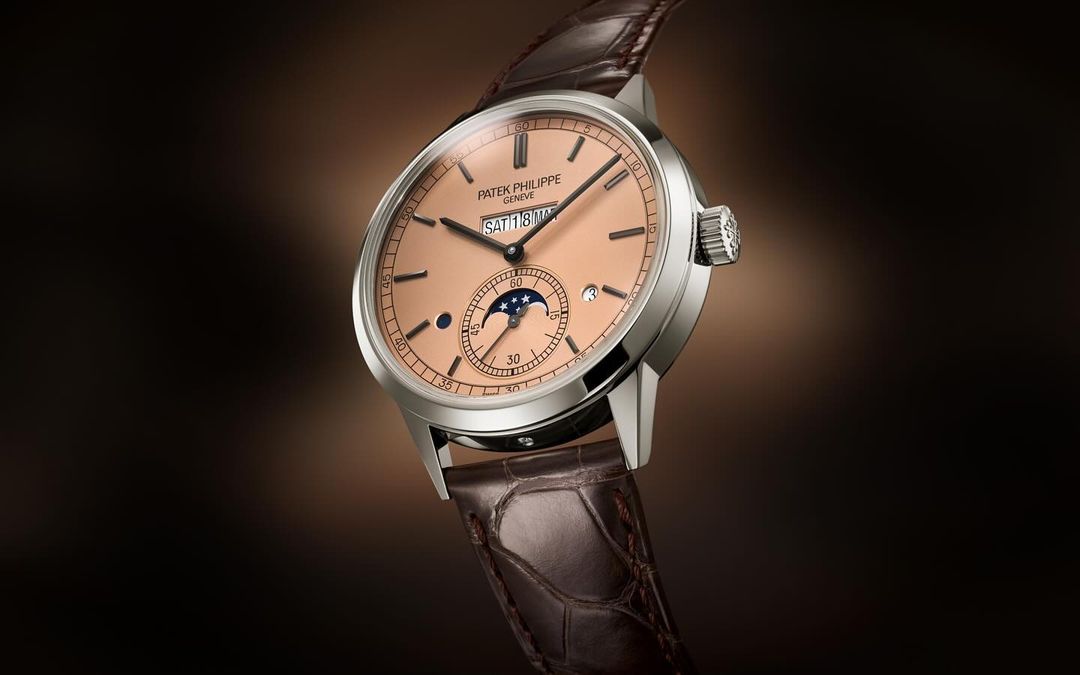
Back at the Swiss workshops, Patek Philippe unveiled the Grand Complications Ref. 5236P-010, which features an opaline rose-gilt dial in a hand-polished platinum case, dotted with one white diamond.
It’s not just the watchmakers who love platinum – the jewellery ateliers are in on the action, too. For decades, diamond specialist De Beers has made the most of the precious metal’s use in classic pieces like eternity rings, solitaires and tennis bracelets, all available in platinum.
Now, even boutique jewellers like Krishna Choudhary, Francesca Amfitheatrof and Brent Neale Winston, to name a few, are embracing the use of the icy-coloured precious metal in their latest designs and collections.
Thanks to platinum’s rarity, durability and versatility, along with its strong associations with all things luxury, its prominence and exclusivity are likely to remain strong, reinforcing its timeless appeal.


