Walking into L’Atelier Paris at Oceans Mall in Umhlanga, Durban, is completely different from stepping into a typical luxury boutique. It’s better. The space is more welcoming than a conventional retail environment, with parquet flooring, brass accents, marble surfaces, and soaring ceilings softened by Art Deco influences. Instead of competing brand identities dominating the environment, the boutique flows as a single, cohesive space – closer to a refined Parisian apartment than a traditional shopping destination.
For owner Jean-Philippe Avenel, that distinction is intentional. “We wanted a fully integrated concept,” he explains. “It is not a succession of brand identities. It is L’Atelier Paris identity.”
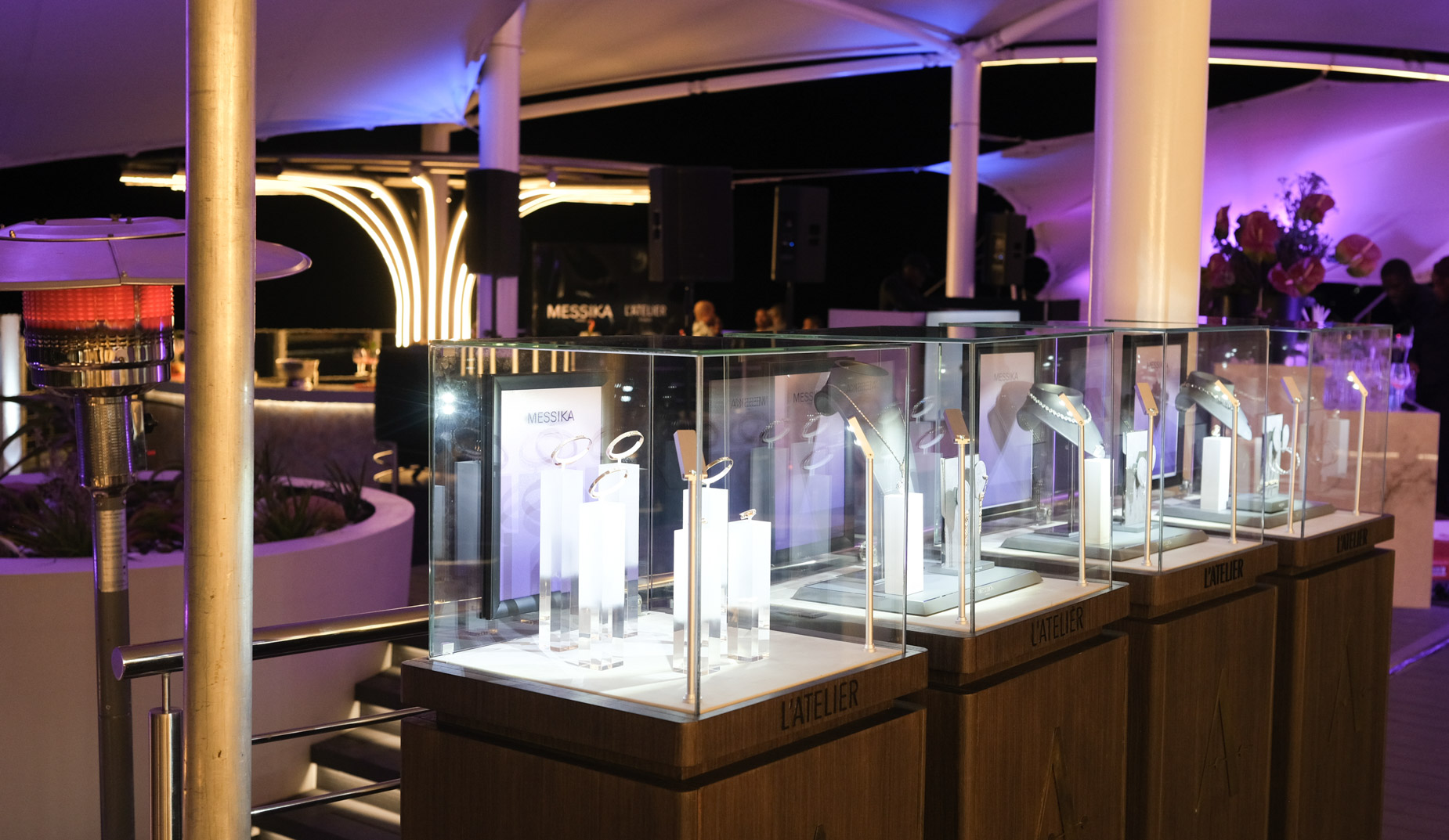
That philosophy sits at the heart of both the boutique and its recent Messika jewellery exhibition – the first independent event of its kind for the maison in South Africa. In many ways, the occasion represented a turning point in how international luxury brands are beginning to view KwaZulu-Natal’s luxury potential.
For years, Johannesburg dominated as the country’s commercial centre, while Cape Town captured international attention with its tourism-driven glamour. Durban, despite its concentration of generational wealth, entrepreneurial success, and strong culture of luxury consumption, was often left out of the broader conversation.
Jean-Philippe believes that perception is finally changing. “What’s interesting is that brands like Messika and Fred have made the move to Durban, while South Africans generally underestimate the city’s real potential,” he says.
Having lived in South Africa for nine years, including six in Johannesburg, Jean-Philippe has closely observed the differences between the country’s luxury markets. Johannesburg, he says, remains the dominant commercial hub with strong internal demand and Pan-African business tourism driving luxury consumption. Cape Town, meanwhile, operates largely as an internationally driven market fuelled by tourism and foreign buyers. Durban is something else entirely. “In Durban, our business is 95 per cent local, if not 97 per cent,” he says. “It’s ultra-local.”
That is precisely what makes the market compelling. Durban’s luxury ecosystem is built on long-term relationships, family milestones, and regional loyalty rather than transient tourism spending. The city’s luxury clientele extends far beyond the city itself, drawing from Ballito, Umhlanga, Hillcrest, Pietermaritzburg, Richards Bay, and the KwaZulu-Natal Midlands.
The region’s accessibility also contributes to its appeal. A short flight from Johannesburg, combined with Umhlanga’s comparatively relaxed atmosphere and strong security infrastructure, has made Durban an increasingly attractive luxury shopping destination for affluent South Africans seeking privacy and ease.
“People like the privacy of shopping in Durban,” Jean-Philippe says. “When you go to Sandton City, you will see many people you know. Here, people feel relaxed.”
That sense of ease filters directly into the L’Atelier Paris experience itself. The boutique’s design language intentionally avoids the cold, transactional atmosphere often associated with high-end retail. Everything, from the Art Deco-inspired door handles influenced by New York’s Chrysler Building to the custom-made 6.5-metre sofa, was designed to feel intimate and immersive.


The sofa looks onto a curated wine collection, which adds another layer to the boutique experience – social, engaging, and distinctly personal. Clients are invited to attend wine tastings while they browse the collections, reinforcing the sense that the space is designed for lingering rather than simply shopping. “It makes it playful,” Jean-Philippe says. “It makes it a completely unique store.”
That experiential approach aligns with Messika’s contemporary positioning. Founded by Valérie Messika, daughter of renowned diamond dealer André Messika, the maison changed perceptions around diamond jewellery by shifting away from rigid formality towards modern wearability, layering, and movement.
Jean-Philippe believes that resonates strongly with Durban’s evolving luxury consumer. “Durban has been used to traditional jewellery for a very long time – a lot of custom-made jewellery, often with a focus on the size of the gemstone instead of the quality,” he explains.


Messika introduced something fundamentally different. “With Messika, we brought a design more on the ‘less is more’ perspective, but with branding appeal.”
That distinction is important because branded jewellery remains relatively underdeveloped within the South African market. While international watch brands have long maintained visibility locally, branded fine jewellery is still comparatively new territory outside of legacy maisons like Cartier.
Jean-Philippe sees the power of branding as central to how South African luxury consumers are evolving. “The brand gives you a certain level of quality standard,” he says. “But also, with brands comes residual value.”
He notes that, in general, South African clients approach luxury purchases differently from European consumers. “In South Africa, luxury goods are considered movable assets,” he explains. “They are secured assets. They are something that can be passed from one generation to another.”

That mentality makes recognisable design signatures particularly important. Messika’s iconic moving diamonds, especially within the Move collection, create immediate brand recognition across entry-level and high jewellery pieces alike. “The moving diamond is really a factor of differentiation,” Jean-Philippe says. “Whether it is a Move Uno bracelet or a high jewellery piece, you recognise Messika immediately.”
The collections’ stackability also resonates with Durban’s clientele, where jewellery purchases linked to milestones and celebrations often begin relatively early. “As a result, one of the ambitions of L’Atelier Paris is to be the local jeweller for families,” says Jean-Philippe.
That family-centred approach has shaped the boutique’s philosophy from the outset. Beyond transactions, L’Atelier Paris creates personal experiences around birthdays, anniversaries, and generational gifting alongside jewellery purchases to turn milestones into lasting memories. “It is much more involved,” Jean-Philippe says. “Way less retail. Way less transactional.”

The success of the Messika exhibition ultimately says as much about Durban as it does about the brand itself. Jean-Philippe believes KwaZulu-Natal stands on the edge of enormous growth, fuelled by tourism development, luxury hospitality projects, and increasing international exposure. From the expansion around Oceans Mall to developments such as Club Med South Africa and high-end safari investment in northern KwaZulu-Natal, the province is steadily positioning itself within the broader global luxury travel landscape. “We have a very solid local market,” he says. “And it will grow exponentially when the world starts to discover Durban and what KwaZulu-Natal has to offer.”
For now, Durban’s luxury scene still operates with a degree of discretion. But behind that understated exterior, a sophisticated market is taking shape – one increasingly confident in its appetite for international maisons, contemporary jewellery, and experience-driven luxury retail.