


Few symbols have travelled as far or resonated as deeply as Louis Vuitton’s legendary Monogram. Spotted in the hands of global jetsetters and fashion icons, adorning everything from handbags to boxing gloves, the emblem speaks a universal design language of heritage and sophistication.
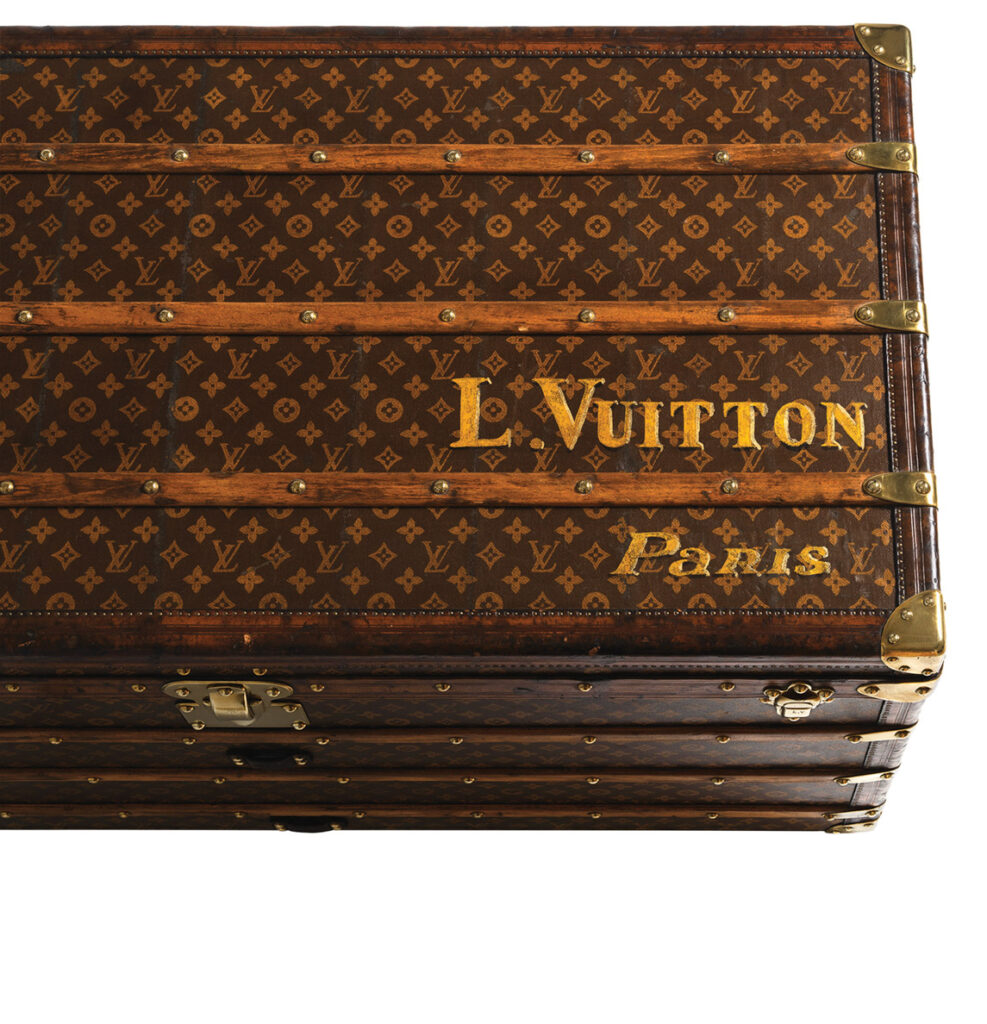
Transcending both time and trend to become fashion’s most famous logo, the LV insignia is not merely part of global pop culture; it has shaped it. Kim Kardashian once said, “There’s a lot of baggage that comes along with our family – but it’s like Louis Vuitton baggage.”
More Than a Logo
Open to artistic interpretations and collaborations that keep the brand vital in our ever-evolving world, it can be said that the Monogram’s true legacy lies in its ability to balance past and present, tradition and innovation. As avant-garde Japanese designer Rei Kawakubo, who has worked with the House, once noted, “Louis Vuitton is the house that most beautifully and skilfully transforms tradition into what is now.”
In 1896, Georges Vuitton, son of Louis Vuitton, conceived a design that would become one of fashion’s most recognisable patterns. Created in honour of his father, the LV Monogram was also a shrewd act of protection. At a time when counterfeits of Louis Vuitton’s striped and Damier check designs were rampant, Georges patented the motif, transforming it into both an artistic statement and a symbol of authenticity. “The only way to remain ahead is to innovate,” Georges is quoted as attesting in the Maison’s historical material.
The intricate pattern was inspired by Neo-Gothic ornamentation and Japonisme, a Japanese art craze in the Victorian era. Incorporating abstract floral motifs reminiscent of the crests found on Japanese family shields, interlaced with the now-iconic LV initials, the emblem was both decorative and distinctive.
The LV Monogram first appeared on a linen jacquard weave. But as the golden age of 20th-century travel dawned, the House moved the motif from canvas to “Vuittonite,” a more durable material designed for longer hauls.
Soon, these trunks and cases became the ultimate expression of modern style for the global elite travelling by steamship and rail. The monogrammed luggage accompanied some of the most fascinating figures of the era, from Audrey Hepburn to Jackie Kennedy.


Hollywood starlet Greta Garbo famously commissioned a custom-made trunk for her shoe collection, while Ernest Hemingway kept one permanently stationed at the Ritz in Paris for his typewriter and notebooks. It’s also believed that a manuscript for his posthumous memoir A Moveable Feast was stored in one of his LV steamer trunks in the hotel’s basement.
In the decades that followed, the LV Monogram became a canvas for bold reinterpretation. It was initially shaped by the House’s creative director, Marc Jacobs, who commissioned Stephen Sprouse’s graffiti collection in 2001.
The collection – which ignited the “It Bag” phenomenon – sparked uproar at the time with its electric neon script scrawled across the Monogram.

Just two years later, in 2003, Japanese artist Takashi Murakami reimagined the motif with his exuberant Multicolore Monogram, splashing the LV insignia across the canvas in candy colours.
“What interested me was bringing high art and the commercial world together,” said Takashi. The collaboration also produced the unforgettable Cherry Blossom collection, its playful pink blooms lending a contemporary twist to a classic.
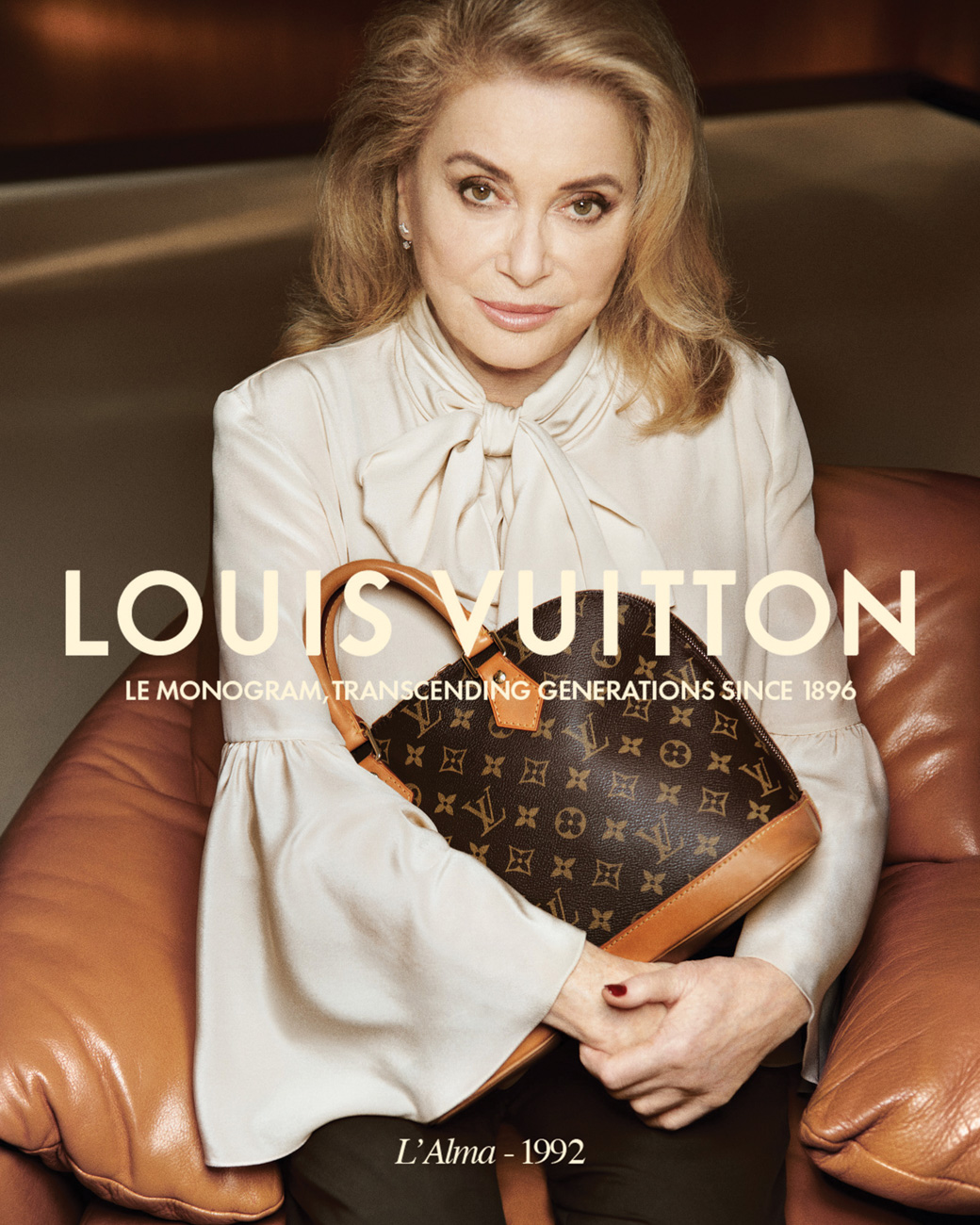
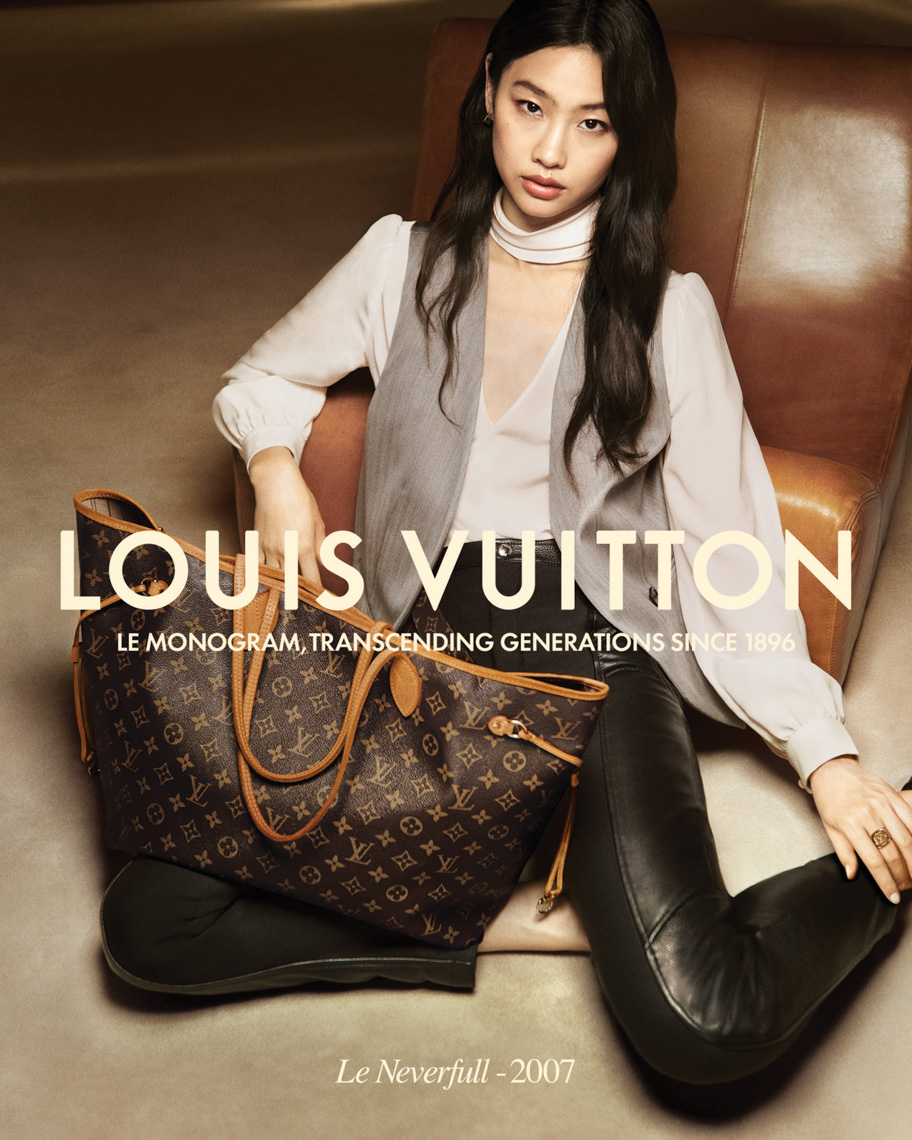
To celebrate the Monogram’s 130-year milestone in 2026, Louis Vuitton has launched a year-long campaign captured by Glen Luchford and directed by Roman Coppola. It pairs the Maison’s most iconic bags with House Ambassadors, who each reveal personal narratives about their bags as trusted travel heirlooms that suit their lifestyle – and last a lifetime.

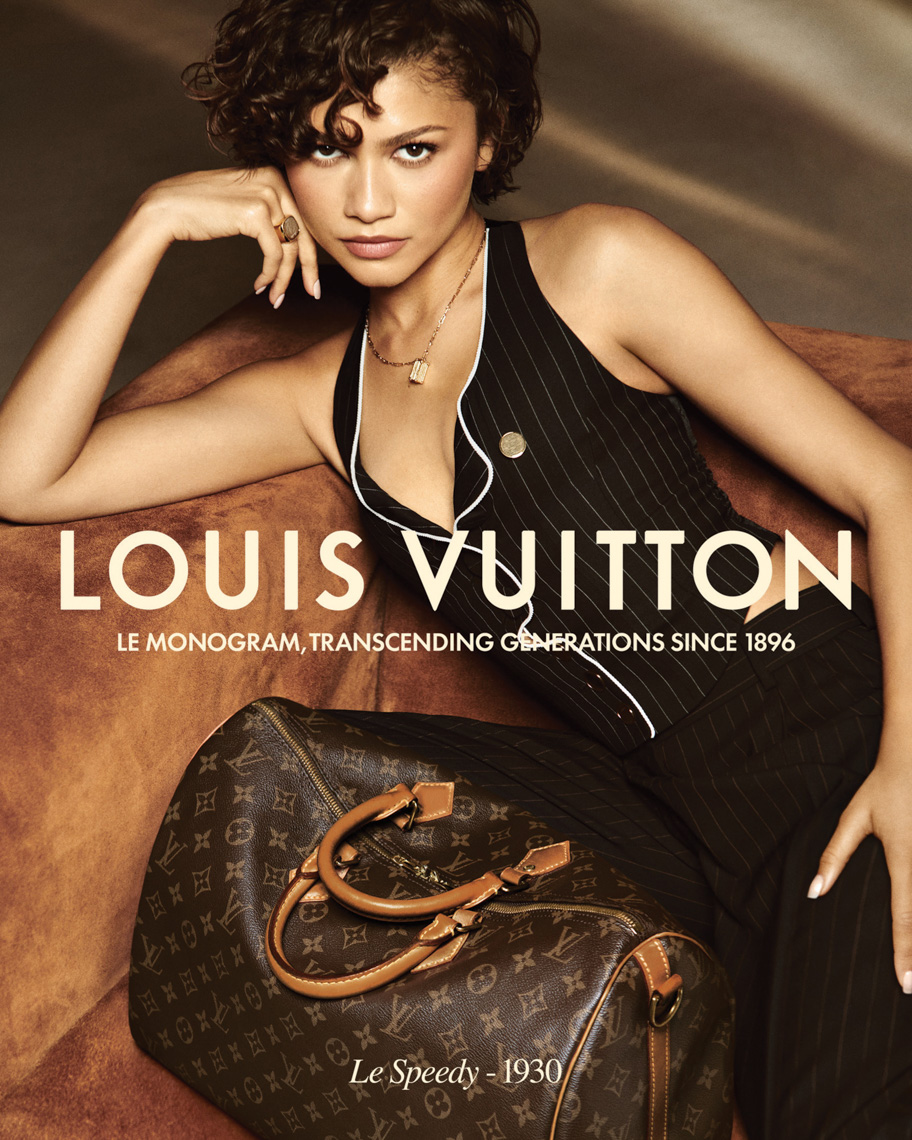
Actress Zendaya introduces the Speedy, a true icon of travel in the 20th century. Its status was cemented in the 1960s when Audrey Hepburn requested a smaller version.
In the campaign film, Zendaya appears as a modern fashion muse alongside the iconic Speedy, reflecting on the bag as both companion and symbol of movement. Addressing it directly, she delivers an animated monologue: “With you, I feel something familiar – like a reflection of my own instinct for velocity. Maybe that’s the attraction, the shared connection of speed, not waiting, just racing together into what comes next.”
The Art Deco-inspired Alma bag mirrors the enduring elegance of French actress Catherine Deneuve. In contrast, Chinese American actress Liu Yifei embodies the effortless sophistication of the Noé, the bucket-shaped bag originally designed to carry champagne bottles. South Korean model and actress Hoyeon showcases the Neverfull, a contemporary classic complete with striped interiors reminiscent of the Maison’s vintage trunks.
The anniversary is also being commemorated through the Monogram Anniversary Collection, a contemporary reinterpretation of the 1896 motif realised through modern design and innovative materials.
A trio of fragrances by Master Perfumer Jacques Cavallier-Belletrud – Attrape-Rêves, eLVes, and Imagination – further captures the Maison’s spirit of adventure, discovery, and exploration.
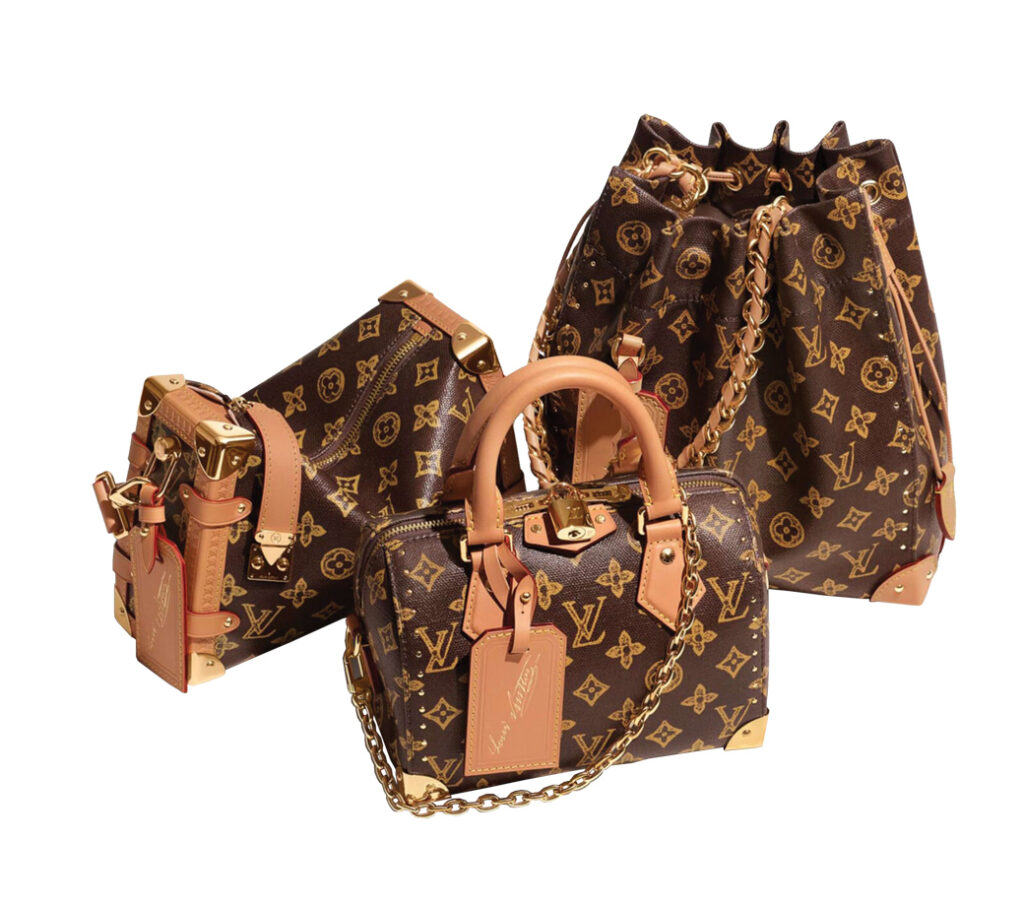
The Anniversary Collection holds three special-edition bag capsules that reimagine the monogrammed icons in new materials.
Monogram Origine appears on a new jacquard weave in soft pastel shades.
Monogram VNN pays tribute to natural cowhide leather that develops a unique patina.
Monogram Time Trunk reproduces modern bags with bold trompe-l’oeil prints mimicking details of the historic trunks.
The bags are currently on display at Louis Vuitton’s pop-up store in Soho, New York. Guests can check in at the immersive hotel-styled space where each room, such as the Noé Champagne Bar or the Neverfull Gym, is themed around one of the Maison’s iconic bags.
The late fashion icon, André Leon Talley, put it aptly when he said, “Louis Vuitton represents the ultimate in travel and the ultimate in luxury.”
Monogram Timeline
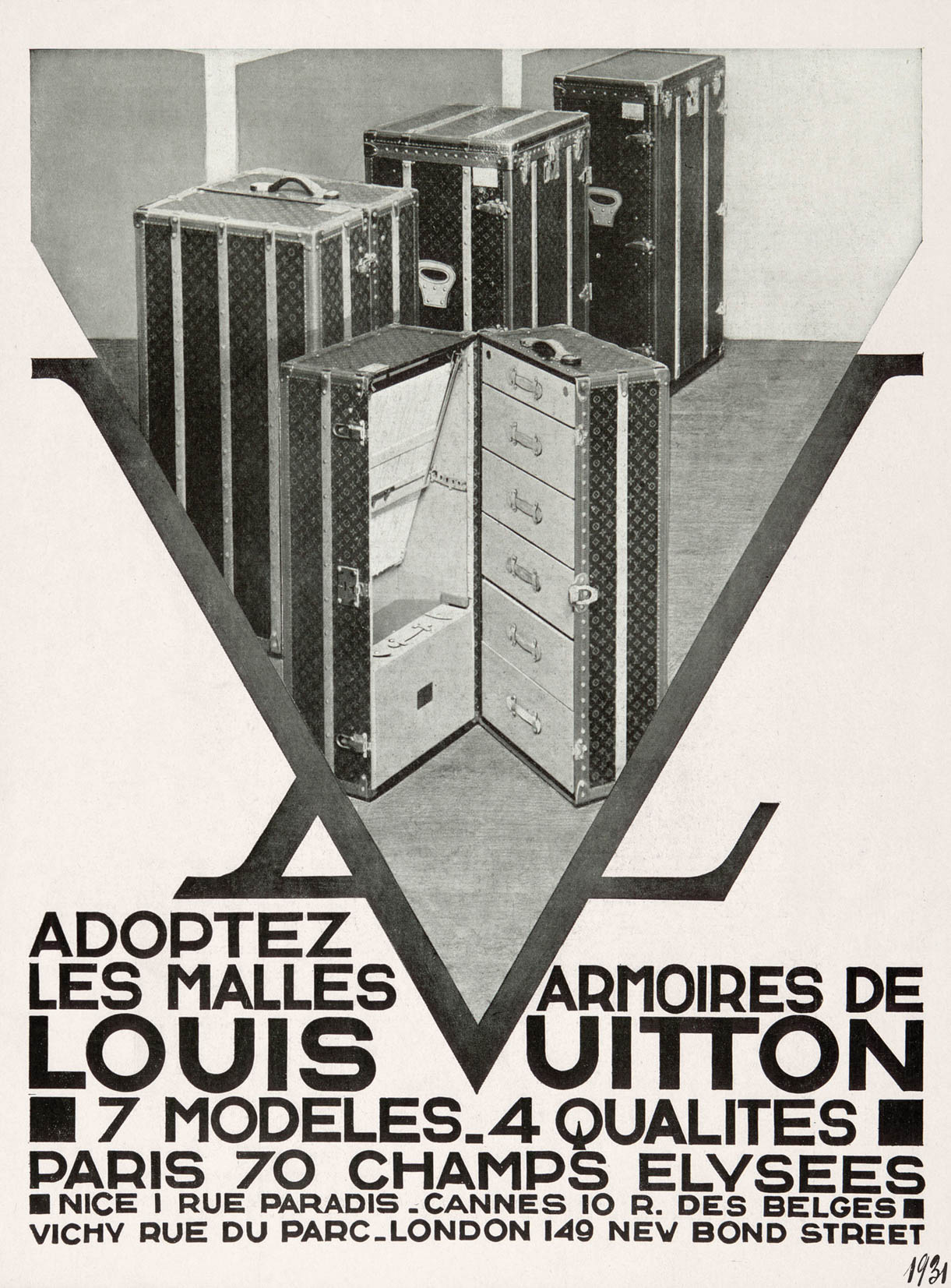

- 1896 – LV Monogram created by Georges Vuitton
- 1930 – Speedy and Keepall designed as travel bags to reflect a new travel age
- 1932 – Noé introduced to transport champagne bottles
- 1959 – Speedy Monogram produced on canvas for the first time
- 1992 – Dome-shaped Alma bag reintroduced and officially named
- 1996 – Monogram’s 100th anniversary
- 2003 – Monogram Multicolore collection created in collaboration with artist Takashi Murakami; a re-edition has been launched for the 130th anniversary.
- 2007 – Neverfull is born and said to be able to carry 100 kilograms
- 2013 – Nicolas Ghesquière adds Monogram to his ready-to-wear collections
- 2018 – Virgil Abloh revolutionises Men’s Monogram in PVC
- 2026 – Monogram turns 130


