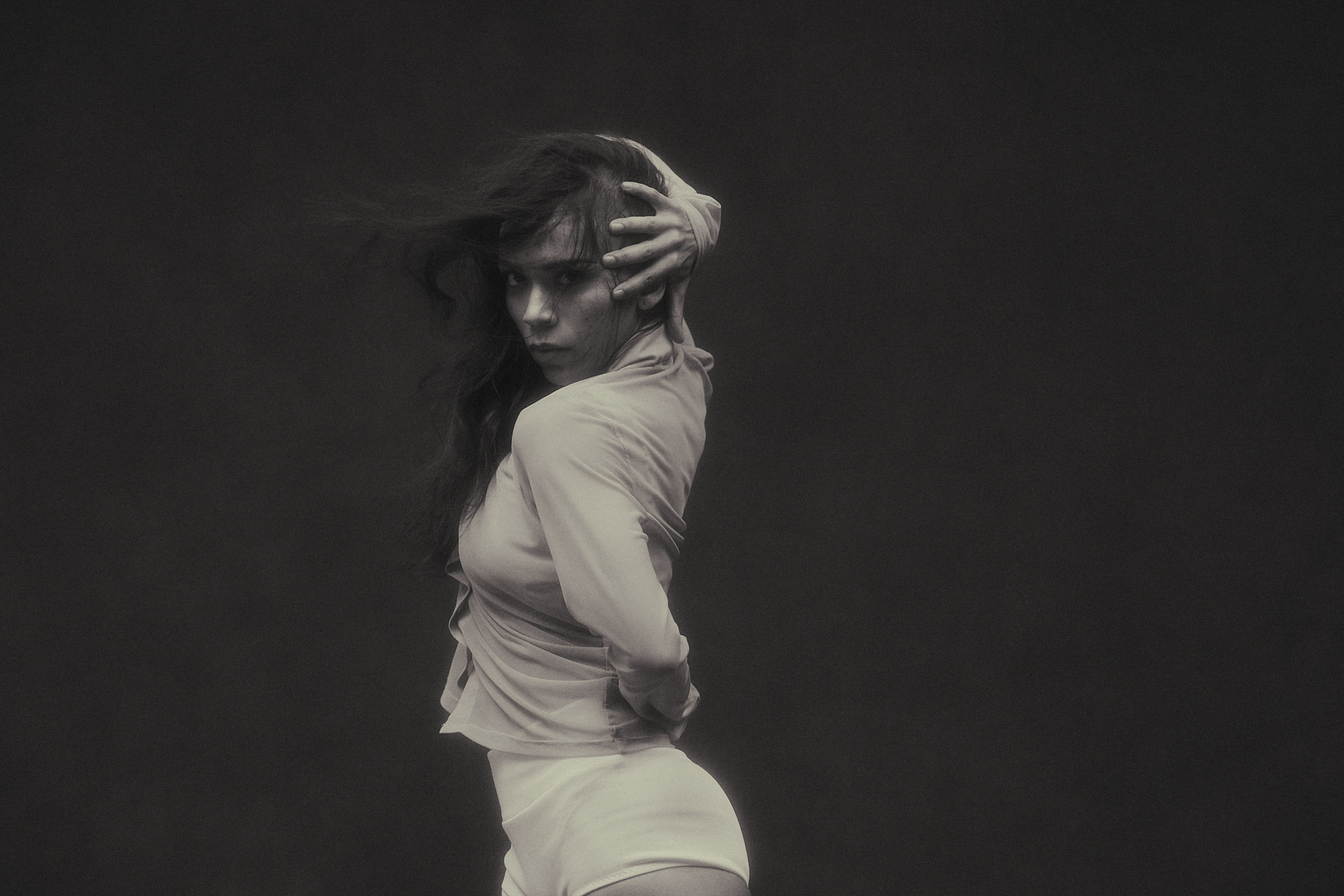
The new work by Cape Town’s Darkroom Contemporary Dance Theatre, e.ID: A Fugue, conceived and directed by Louise Coetzer, began its international journey at The State Theatre in Pretoria before travelling to Berlin (DOCK 11, 2–5 September) and Arnhem (ArtEZ, 8–9 September).
Inspired by the structure of a musical fugue, it explores identity in an age when our physical selves increasingly coexist with digital versions that may ultimately outlive us.
“I find myself less interested in certainty than in the continual process of becoming,” says Louise. “We spend our lives becoming through memory, relationships, loss, and experience.” e.ID, she explains, lingers within that impermanence rather than resisting it.
The score brings together South African composers Njabulo Phungula and Inge Beckmann with Germany’s Heidrun Schramm and Nicolas Wiese, under the musical direction of Brydon Bolton. Rather than imposing a soundtrack on completed choreography, the music developed alongside it.
Brydon describes his role as “the translator between the two worlds of music and dance”, interpreting Louise’s vision for the composers and watching the score grow “with and around the choreography”.
“There is a magical moment when the two disciplines start to meld into a cohesive whole, and you can no longer separate them out,” he says. “That, I believe, is what we have achieved.”
Breath and the human voice provide a thread through the composers’ very different approaches. Njabulo began with improvisation, working with a limited vocabulary of sounds that expanded to include body percussion, melodic vocals, bowed strings, distorted and prepared piano, prepared guitar, and object percussion.
For Inge, air – and its absence – became a creative compass. Her arrangements are constructed entirely from the human voice and its percussive possibilities, drawing on everything from the unconscious act of humming to the altered sensation of singing underwater. Layered with more formal classical vocals, these sounds create an imagined “subterranean cathedral choir”.

Heidrun and Nicolas likewise work with voices and breathing, alongside everyday objects, water, and acoustic instruments, moving between what they describe as organic, physical, and frictional territory and something more ghostly and ethereal.
That sense of transformation lies at the heart of e.ID. Like a fugue, ideas appear, disappear, and return in changed form. Music, movement, light, and interactive technology become inseparable parts of the same question: what remains of us as we continually become someone new?


It’s a gripping work. You can’t take your eyes off the performers for a second for fear of missing an important detail – and you will, because of the way the action unfolds. Book two performances if you can.
e.ID: A Fugue is supported by the National Arts Council of South Africa, the Christian Ludolph Marais Trust, the Goethe-Institut, DOCK 11, and Future Storytelling Lab.
Images: Oscar O’Ryan