


In 1847, Louis-François Cartier took over the business of his mentor, Adolphe Picard, and founded a Parisian firm that would one day be recognised the world over. Within just one year he could already count Princess Mathilde, the niece of Napoleon I, among his clients, and not long after, the Empress Eugénie herself.
His son Alfred, who took over in 1874, understood the importance of networking for the sale of the jewels, watches and objets in the boutique (he would ask existing clients for introductions to more illustrious ones), and laid further foundations for his three sons to build on in the years to come.
Alfred made the eldest, Louis, a partner in the firm in 1898, but not before he had married into the successful Worth family of couturiers, which exposed the firm to a yet greater international client base.
Encouraged by Louis, they moved premises the following year from the boulevard des Italiens to the more exclusive rue de la Paix, next door to the House of Worth and round the corner from the luxurious Ritz Hotel.
The Maison Cartier was now firmly positioned in Paris and already capitalising on the world around it through social networking, strategic intermarriages and making the most of its prime location.
While it reacted to the times, it would also prove in many ways to be ahead of them, and with Louis’s two brothers, Pierre and Jacques, waiting in the wings, the family would soon be ready to take the business to the next stage.
The Power of a New Class
With the 1900s came a new era for Cartier and a new order for the world. The previous century had ushered in massive global change, with electric lighting, steamboats and train travel, and swift economic growth.
Such rapid industrialisation had created an era of stability, but also of social mobility, with a new class of nouveaux riches, whose goal was to rise to the top with the help of their newly acquired wealth and the networking that money afforded them.
The Belle Époque in Europe was outstripped only by the Gilded Age in America, where the concentration of fresh wealth saw the adoption of distinguished and traditional European aesthetics as a means of social validation. Hundreds of so-called ‘Dollar Princesses’ married into the British aristocracy, swapping their new American money for old British titles.
In jewellery, technical and artistic change was also underway.
Recently discovered and plentiful diamond deposits in South Africa were paired perfectly with platinum, a light but tensile metal whose application in jewellery Cartier was instrumental in advancing.
Together, they were worked into delicate openwork designs in a ‘new style’. The Garland Style, with its French neoclassical inspiration, was a breath of fresh creative air among all the winds of change.


— From Top Left: Late Art Deco period brooch, Cartier London, 1941; Patiala Necklace, Cartier Paris, 1928; Bandeau in Tutti Frutti style, Cartier London, 1928; Brooch, Cartier London, 1933
A Tiara for the Times
It was into this environment that the magnificent Manchester tiara came into being. Commissioned from Cartier Paris in 1903 by the Dowager Duchess of Manchester, it captured the zeitgeist of the age.
The Duchess – born Consuelo Yznaga in New York – was a Cuban-American heiress to a new fortune who had, some 27 years earlier, married the Viscount Mandeville, British aristocrat and heir to the Duchy of Manchester. Her family were friends with the Vanderbilts and were ensured a place in society through their daughter’s marriage into the British aristocracy.
Consuelo would go on to become a successful society hostess, part of the close circle of the Prince of Wales, later King Edward VII, and latterly had even entertained Tsar Nicholas II.
Already widowed some 10 years when she commissioned the tiara, she had recently come into her own money with the death of her brother in 1901, and the order must have to some extent symbolised the freedom this accorded her.
It was also a metaphor for the times, emblematic of the turning of the new century: new diamonds sparkling in the electric light, glittering on the head of a member of an entirely new social class.

Design and Innovation
The tiara’s design – a series of sweeping arcades appearing as open flaming hearts – was inspired by the ironwork and architecture of eighteenth-century France and executed by the Parisian workshop Harnichard for Cartier.
The Duchess herself provided more than a thousand brilliant-cut diamonds, and Cartier supplied – unusually – glass pastes (‘strass’ in the record books) for the final scrolls at the back.
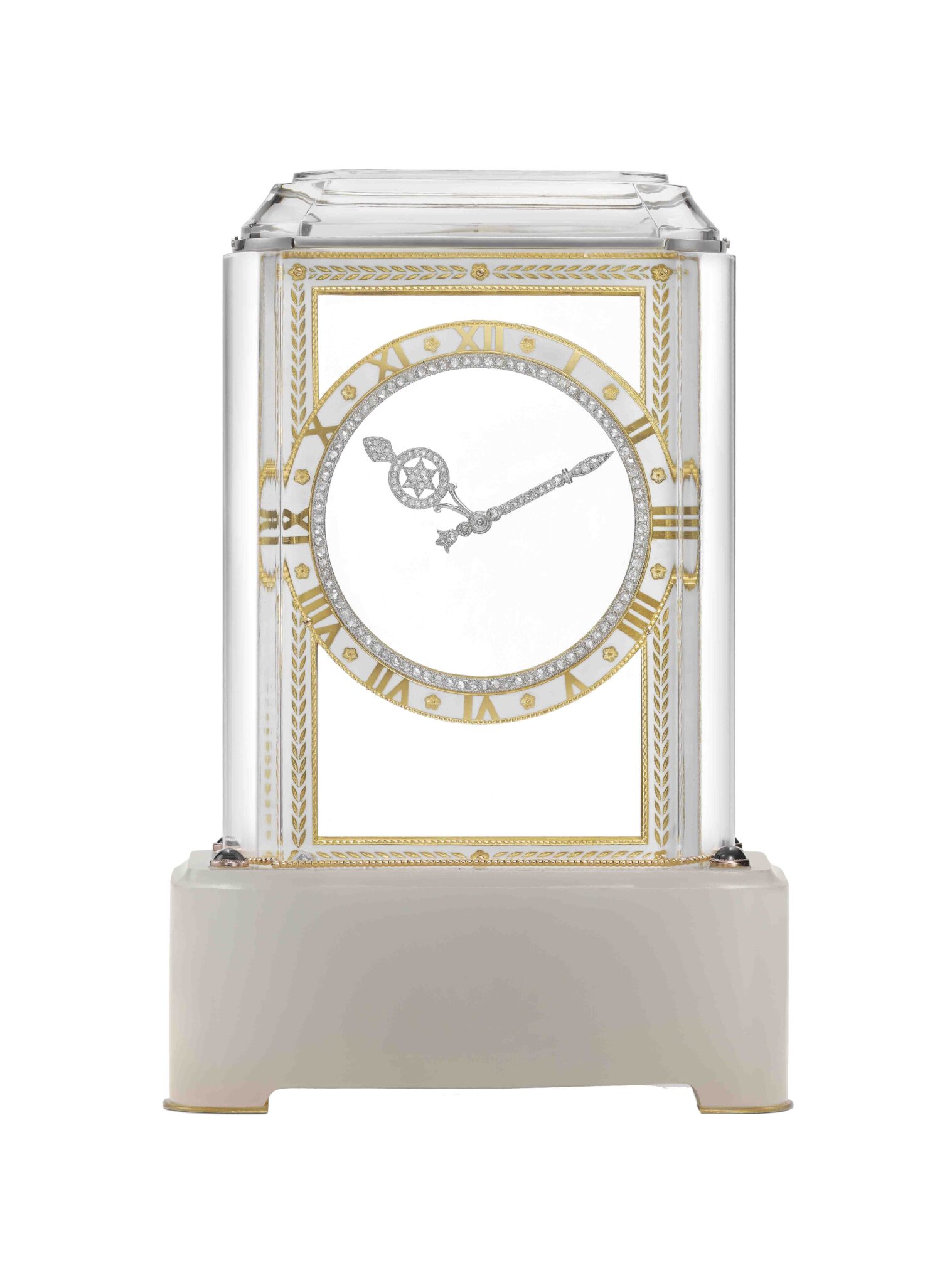
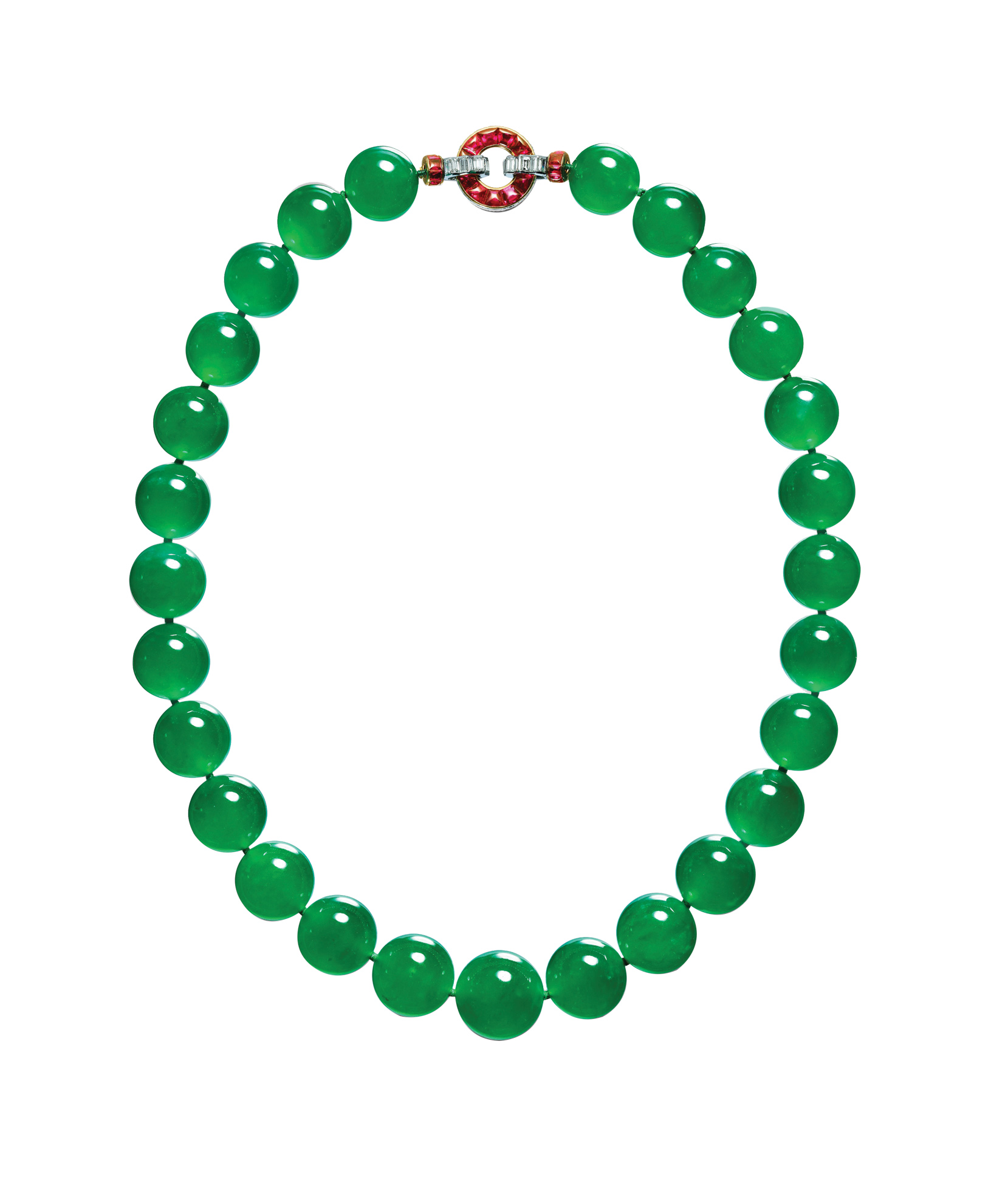
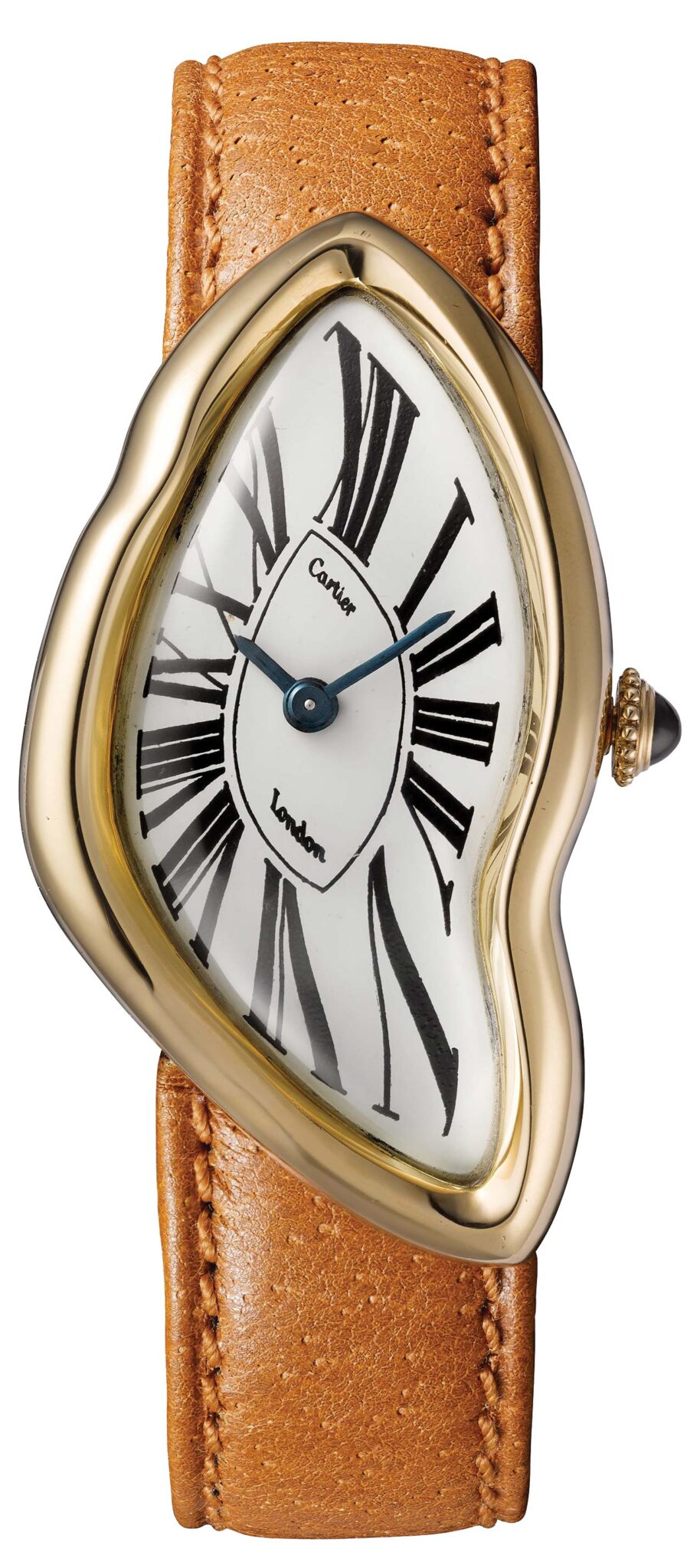

— ‘Model A’ Mystery Clock, Cartier Paris, 1914; Crash Wristwatch, Cartier London, 1967; Diamond brooch, Cartier Paris, 1910; Burmese jade necklace that belonged to American heiress Barbara Hutton. Cartier Paris, 1934
Equally unusually, the stones were set not in platinum – as the lightness of design and moment in time would have suggested – but in the slightly older combination of silver (for the diamonds at the front) and gold (at the back).
From a cursory glance, one would be certain it was a platinum mounting, and a similar tiara, made up for the Countess Moy six years later, is recorded in the Cartier Archives with exactly that.
The Manchester tiara setting, like its owner, represented the transition from old to new, past to present, but also with a hint of the future.


