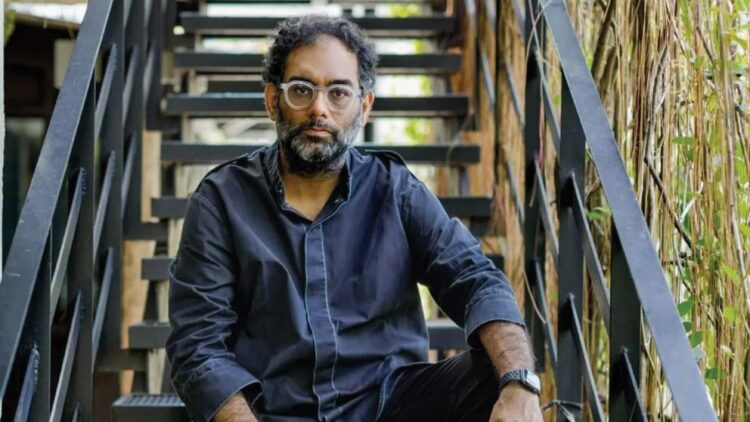
When I turned 40 last year, standing in my Hong Kong apartment surrounded by half-packed boxes, I faced what many long-term expats eventually confront: the “now what?” moment. After a decade bouncing between Hong Kong’s skyscrapers, Dubai’s golden deserts, and Singapore’s manicured efficiency, the idea of returning to South Africa tugged at me. But another voice whispered: “What if Thailand could be more than just a holiday destination?”
After recently going freelance as a media editor and writer for international publications, my new office now fits in a laptop bag. This newfound mobility allowed me to trade big-city life for something radically different — a jungle-clad apartment in Phuket’s Kathu district, where my morning coffee comes with monkeys, squirrels, and the occasional sighting of a monitor lizard ambling past my balcony.

Thailand had always been my playground — a destination for parties, concerts, and holidays. The idea of living here never crossed my mind until burnout from Asia’s hyper-competitive cities forced me to reconsider everything. What began as a six-month “reset” has now stretched into a year-long love affair with the Land of Smiles.
The Visa Game
South Africans know all too well the hurdles of global mobility. When I discovered Thailand’s Destination Thailand Visa (DTV), it felt like finding a backstage pass to paradise. The DTV has become a golden ticket for remote workers like me. Valid for five years with multiple entries, it’s perfect for location-independent professionals (though it prohibits working for Thai companies). At 10 000 THB (R5 400) plus proof of 500 000 THB (R260 000) savings, it’s an accessible option — one that even allows bringing your family along.
Bangkok vs Phuket: Finding My Fit
My first three months were a deliberate immersion in Bangkok’s glorious chaos, but Phuket’s island rhythm stole my heart. Where Bangkok excites, Phuket restores — a place where even mundane errands feel like holiday activities. The slower pace (yet still with urban conveniences) has done wonders for my mental health.

I’ll admit to initial scepticism. My only Phuket memories involved the tourist circus of Patong Beach. But discovering Kathu — a lush, residential area inland — revealed another side entirely. It’s suburban Thailand at its most authentic. No touts, no party crowds, just the occasional roar of a longtail boat engine in the distance.
The Practical Magic of Thai Living
What keeps me here isn’t just the postcard scenery, but how effortlessly life functions. Take transportation: after years of Uber battles in Johannesburg and taxi queues in Dubai, Grab (Southeast Asia’s ride-hailing app) feels like sorcery. My 10 km bike ride to Patong costs R50 — less than a MyCiTi bus fare in Cape Town. When I need to venture further, the Bolt app often undercuts Grab’s prices.

Another perk: in Thailand, I’m always connected. Not only is Wi-Fi almost free everywhere you go, but the top-up mobile phone packages are incredibly affordable. My monthly pay-as-you-go package, without any expensive locked-in contracts, costs only THB 315 (R170) a month and includes unlimited high-speed data.
Then there are the 7-Elevens — these fluorescent-lit sanctuaries deserve their own ode. Open 24/7, they stock everything you could want or need to survive. After living in overpriced cities like Hong Kong and Dubai, it’s a small delight in life that I can walk into a shop with a basket and throw in whatever I want without counting or breaking the bank.
Safety: A Revelatory Luxury
Coming from Johannesburg’s hyper-vigilance, Thailand’s safety still astonishes me. This safety manifests in small freedoms: leaving my laptop unattended in a café while using the restroom, strolling through unfamiliar neighbourhoods after dark, or — most revolutionary for any South African — enjoying solitary beach walks. My Johannesburg-honed hyper-vigilance has softened into something resembling normalcy.
The Cost-of-Living Reality
As a traveller, I always believed Thailand was cheap. Now that I live here, I realise it’s even more affordable than I thought. The things I previously considered budget-friendly are, in fact, even cheaper once you explore deeper.
For example, accommodation costs vary widely. You can find rent from as little as THB 6 000 to THB 30 000 a month, depending on your preferences. I chose a serviced apartment in a mid-range hotel in a suburban jungle area called Kathu, away from the crowds and tourists of Patong. As a long-term resident, I pay just THB 12 000 (around R6 500) per month, which includes cleaning, Wi-Fi, and amenities like an infinity pool and gym. I also have no contract — just a two-week notice if I decide to move, giving me complete freedom.

No matter your budget, Thailand is a culinary heaven. It’s the street food scene that offers the most authentic dishes at unbeatable prices. A plate of pad Thai from a street vendor costs around THB 70 (R38), making every meal a delight. Since living here, I’ve discovered I can order these same meals via the Grab app, often with free delivery and discount codes. Sometimes, I get two freshly cooked, quality meals delivered for just THB 90 (R50). I’ve never eaten so well, with such fresh ingredients, at such a reasonable price.
Expenses I once thought were significant, like Botox treatments, are surprisingly affordable — around THB 4 000 (R2 100) for 50 units of Korean Botox (I’m smiling just thinking about it, but you wouldn’t be able to tell).
According to Google, a monthly budget of around USD 1 500 (R26 500) is enough to live comfortably here. And that’s pretty accurate. With that amount, you can cover rent, transport, food delivery, and even enjoy some entertainment or local travel if you embrace Thailand’s relaxed, “Thai-style” approach to life.
The Trade-Offs
No system is perfect. The DTV’s banking restrictions mean relying on Wise transfers and cash withdrawals. And while I can renew this visa, permanent residency remains out of reach — a reminder that Thailand offers hospitality, but not necessarily a long-term future, to digital nomads.
Of course, being away from home and your loved ones is never easy, and nothing can ever replace the charm of South Africa.
Same Same, But Different
Thailand mirrors South Africa in unexpected ways. The tropical humidity feels like Durban summers. The Thai concept of sanuk (finding joy in everything) mirrors our ubuntu spirit. Even the food triggers nostalgia — a sago pudding sold at a nearby street-food stall tastes eerily similar to my mom’s recipe, just with pandan and coconut instead of golden syrup. For now, this “same same but different” existence suits me perfectly — a temporary home that feels surprisingly permanent.