

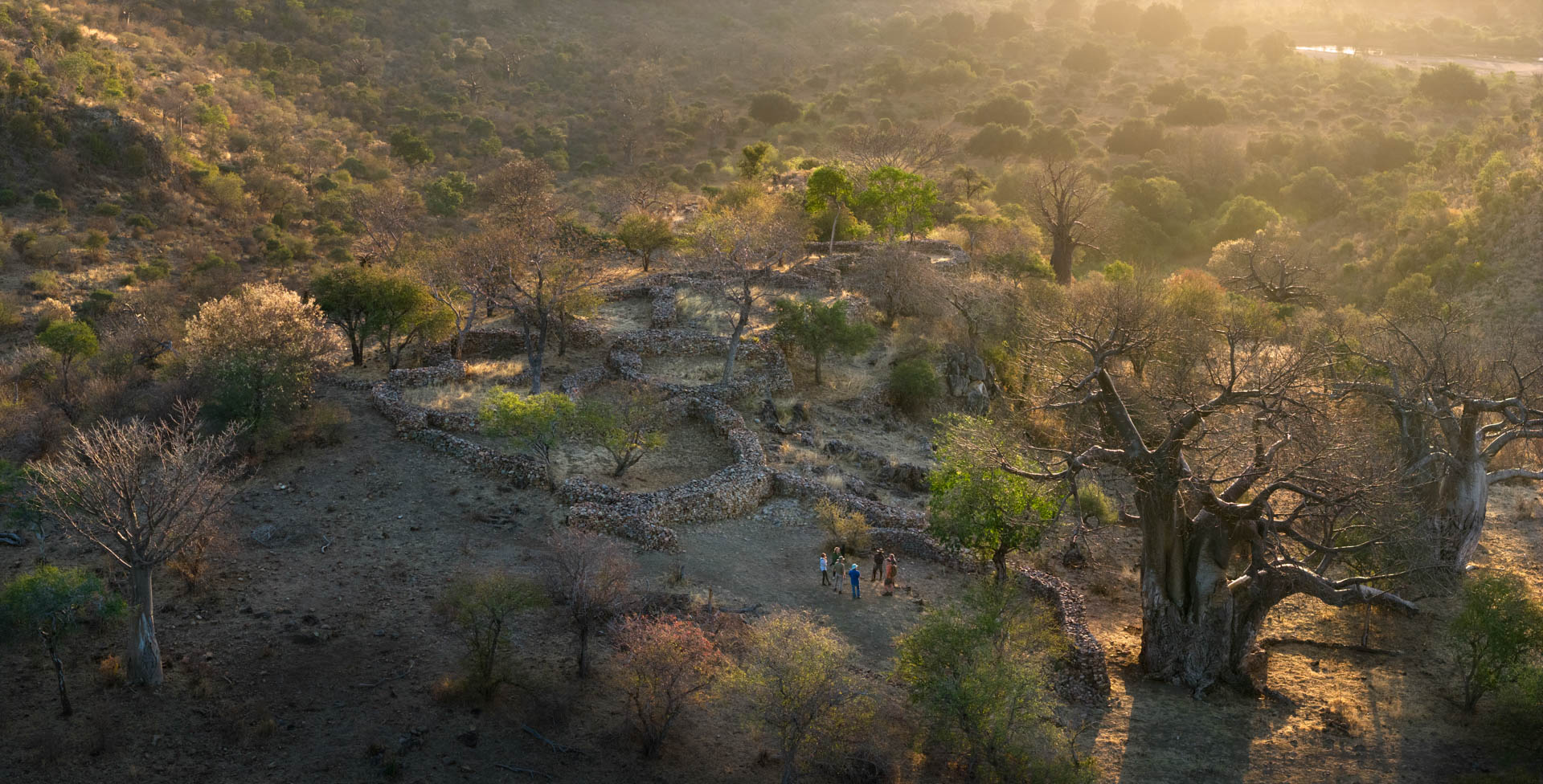
For African globe-trotters who have conquered Kilimanjaro, tracked gorillas through Rwanda’s misty forests, and surveyed lions from private bush suites, a new pinnacle of exclusivity has emerged: the archaeology safari. These are private, expert-led expeditions grant access to UNESCO fossil caves, ancient kingdoms, and live excavation sites, all while guests stay in some of Africa’s most divine lodges and concessions.
The ultimate luxury, it seems, is no longer what you see, but what you touch, unearth, and fundamentally understand about humanity’s deepest origins.

Where Economics Meets Ancient History
Paul Zille, a development economist who founded Origin Safaris, recognised an untapped convergence in South Africa’s travel market.
“Working as an economist in SA’s wildlife-tourism economy, I became aware of an unexplored opportunity in the market for an offer that combined SA’s iconic and globally celebrated palaeoanthropology and deep history with our pristine wildlife, for which we are well known,” he explains. “The sites I focus on combine these two features in the same place — literally a 15-minute game drive in an open safari vehicle accompanied by an expert in both subjects — making them unique and compelling.”
This fusion of world-class archaeology and wilderness is reshaping luxury travel in Southern Africa. At Pafuri Luxury Tented Camp in northern Kruger, guests can wander through fever tree forests before taking a short game drive to explore Thulamela’s royal graves — the remains of a gold-rich stone city that predated and outlived both Great Zimbabwe and Mapungubwe.
Further south, the Cradle of Humankind offers boutique accommodations such as Cradle Riverhorse, where panoramic highveld views provide the backdrop for handling fossil-encased breccia from Gladysvale Cave or encountering echoes of Australopithecus sediba at UNESCO-protected sites.
These experiences operate through carefully negotiated partnerships. Paul maintains arrangements with lodge operators who either own the land on which game reserves and archaeological sites are located (such as the Cradle Nature Reserve) or hold licences to access sites through SANParks. This is privileged entry that standard tourism cannot match, all while ensuring ongoing research remains uncompromised.

Beyond Wildlife Through the Intellectual Safari
What distinguishes these archaeology-focused journeys from standard wildlife safaris? According to Paul, it’s the depth of narrative and discovery.
“The major differentiator between a standard wildlife safari and Origin Safaris journeys is that we combine pristine wildlife and wilderness areas in the Kruger Park and other game reserves with globally significant palaeoanthropology and deep history,” he says. “Each site is associated with a fantastic story of discovery, meaning, and historical significance.”
These stories shift the safari experience entirely. Guests learn why the Cradle of Humankind (a remarkably compact 20km by 40km sliver of land north of Johannesburg) represents the world’s most diverse concentration of evidence relating to human origins.. They uncover the little-known history of the Thulamela Kingdom and its 400-year role in supplying ivory and gold to the vast Indian Ocean trading network. They explore Bokoni’s ancient stone terraces at Verlorenkloof and sophisticated agricultural systems that rival those of contemporary European societies.
These are not passive viewing experiences, but intellectual expeditions that fundamentally reshape guests’ understanding of humanity’s place in deep time.
“It is an exhilarating combination of adventures, which our guests always find to be incredibly thrilling,” says Paul.

Citizen Scientists Digging into Discovery
Marisa Rodriguez, founder of Ancient Odysseys, has pioneered a highly immersive — and highly exclusive — model by placing ultra-high-net-worth travellers directly into active excavations as working participants.
Her company has developed relationships with leading researchers at UNESCO World Heritage sites in Africa and around the world, allowing guests to join excavations alongside world-famous scientists.
“Ancient Odysseys has developed a new travel activity whereby people can join the excavations, working right alongside the researchers in Africa and beyond,” Marisa explains. “Guests have the chance to directly contribute to the science in a meaningful way, while providing an important funding resource for these sciences.”
In South Africa, at Kromdraai and Sterkfontein Caves in the Cradle of Humankind, travellers join active excavations where two-million-year-old human ancestors (including Little Foot, a near-complete Australopithecus dating back between two and three million years) have been discovered.
In the Karoo and Eastern Cape of South Africa, travellers can dig the 200- and 500-million-year-old ancestors of mammals and join a guided tour with Dr Bruce Rubidge, South Africa’s leading palaeontologist and a world authority on fossils in the Karoo.
In Kenya, at Lake Turkana’s Koobi Fora, guests work at a site that has yielded prolific evidence of hominins dating back over four million years, including the discovery location of the remarkably complete Homo erectus skeleton known as Turkana Boy and the world’s oldest stone tools.
Marisa has made a point of making palaeontology and archaeology accessible to travellers seeking highly exclusive, hands-on experiences. Excavation skills are taught on-site, and while patience is required, the thrill of discovery is unmatched.
“Being the first person to unearth and discover something that has been buried in time brings about a moment of wonder and a jolt of adrenaline-fuelled joy, creating a tangible, physical link — and a deep emotional connection — between you and the distant past,” she says.

The Ethics of Exclusive Access
As access becomes luxury travel’s new currency, ethical considerations are paramount. How do operators ensure privileged entry doesn’t compromise fragile sites or ongoing research?
For Origin Safaris, the answer lies in strict regulatory compliance. All sites are protected by environmental regulations, with access controlled through permits and visitor limits. Marisa’s model places guests under the direct supervision of on-site leading researchers, ensuring professional guidance at every stage.
“Because Ancient Odysseys works directly with the scientists and researchers who lead the work at each dig site, travellers are always under the leadership and guidance of these professionals,” Marisa emphasises. Unsupervised access is simply not considered.
Funding the Future of Discovery
Beyond the transformative personal experience, archaeology and palaeoanthropology itineraries help address a critical funding gap. Both disciplines have long struggled with inadequate financial support, with intense competition for grants threatening both fieldwork and laboratory analysis.
When travellers pay to participate in these expeditions, they provide vital funding that sustains scientific research. For many researchers, companies like Ancient Odysseys have become crucial lifelines, offsetting funding shortfalls and enabling continued discovery.
In South Africa, Ancient Odysseys partners with GENUS Palaeosciences, which provides research grants, tools, funding, and support, while actively promoting diversity and equity in the field.
There’s also a powerful, intangible benefit: the fulfilment that comes from helping others and contributing to real scientific progress. Few types of travel offer the same sense of purpose, connection, and impact.
The Privilege of Exclusivity
In a travel market saturated with private game drives and exclusive lodge access, archaeology safaris offer something profoundly different: the chance to hold a 100 000-year-old spear point, to stand alone inside a lost royal citadel, or to unearth a fossil that hasn’t seen daylight in millions of years.
South Africa, as Paul notes, is a treasure trove of archaeological sites unknown even to most South Africans. By clustering high-end safari comfort, pristine wildlife, and iconic archaeology in accessible locations, operators are introducing travellers to an untapped niche that few destinations globally can match.
For those who have done everything else, this is the new pinnacle of luxury: not simply witnessing history, but touching it, excavating it, and fundamentally understanding humanity’s place within it.

Considering an Archaeology Safari?
If you’re inspired to experience these expert-led journeys into Africa’s (and humanity’s) story:
Origin Safaris (South Africa)
Enquiries and bookings:
• Visit: originsafaris.africa
• Email: [email protected]
Ancient Odysseys (Africa & Global)
Enquiries and bookings:
• Visit: ancientodysseys.com
• Email: [email protected]


