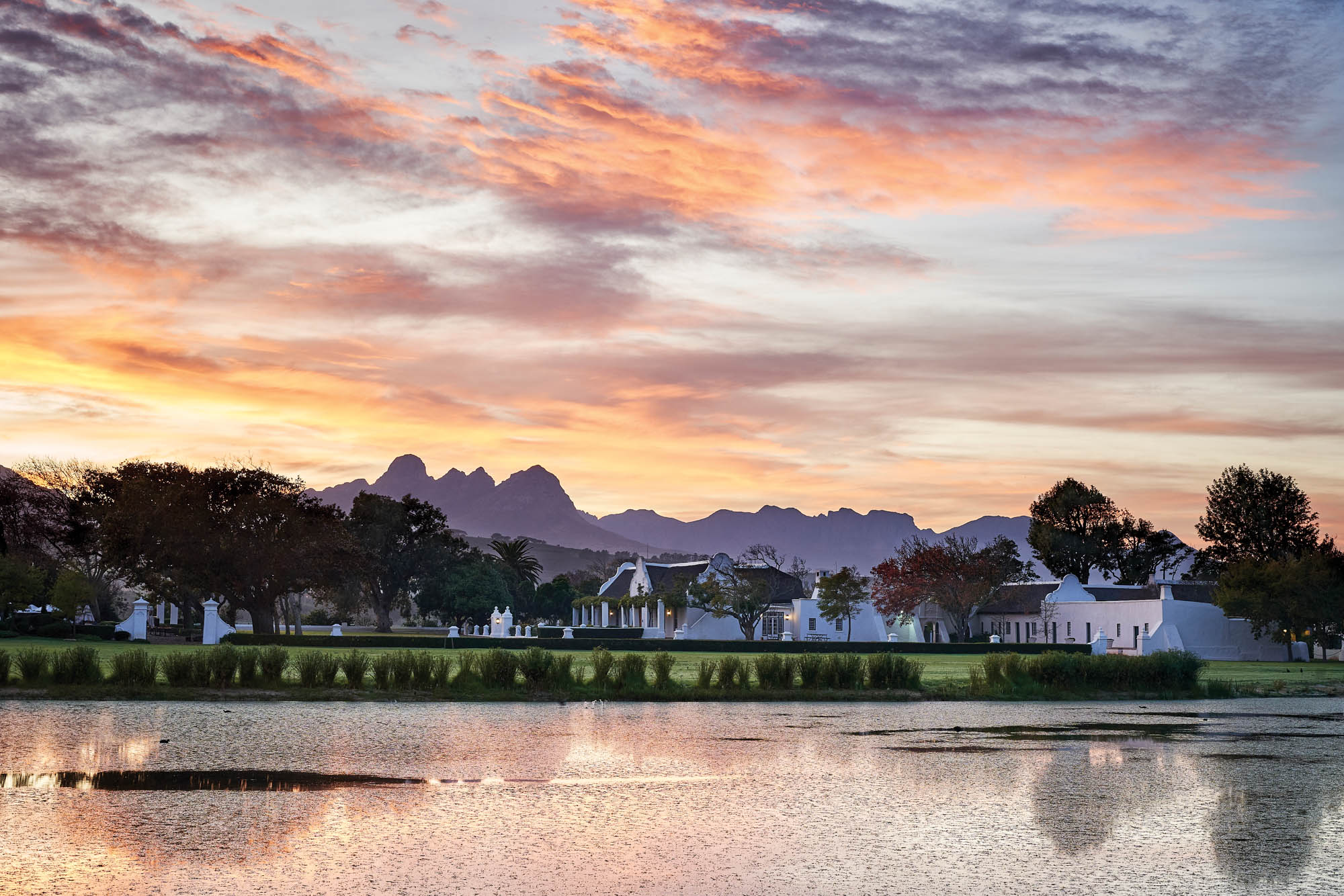
Sitting in at a long table for a showcase media lunch, conversation clattering like cutlery between speeches, I couldn’t help but marvel at the transformation of Vergenoegd Löw wine estate.
While Johann Gibson’s bookVergenoegd Löw Reds, Racehorses and Runner Ducks – An African Wine Journey from 1696 traces its fascinating history, I’ve known the property, situated near Somerset West, some 30km from Cape Town, for only about three decades. This is still before the current owner took over in 2015.


Under the six generations of the Faure family on the 330-year-old property, the farm was among the first – if not the first – in the Helderberg to have a wine-tasting room open to the public. This certainly helped spread the contemporary fame of its red wines, port, and ducks, as well as critically acclaimed restaurants like Michael Israel’s Pomegranate.
What has transpired since may have once been deemed inconceivable. At the turn of the millennium, the 160ha farm felt like a remote outpost. Today, urban sprawl along the False Bay coastline makes it more like an island, with a stately werf that’s home to geese and chickens as well as Indian Runner ducks, its fields with grazing Dexter cattle and sheep, and, of course, the vineyards.
Estate owner Dr Peter Löw, who sits beside me at the lunch, leans in and says almost mysteriously: “We are like a lost place.”
And that is no understatement. Despite having evolved into a world-class and multi-faceted destination sought out for its elegant refinement, the property provides a magical element of fresh discovery for every newcomer.

A Decade of Transformation
Developments have been underway at the farm for a decade already. Some significant milestones include the replanting and restoration of the vineyards and wine cellar, the restoration of some buildings, the addition of accommodation, and the introduction of visitor experiences, including restaurants operated by Bertus Basson.
In more recent months, however, Vergenoegd Löw was named one of the Top 100 Sustainable Hotels and Resorts of the World by the International Sustainability Awards.

Its hotel also received its fifth star from the Tourism Grading Council, while the manor house was transformed from a wine-tasting facility into an art-resplendent lounge reserved exclusively for hotel guests.
Chef Michelle Theron (ex Pierneef à La Motte and Hazendal Wine Estate) was appointed Head of Gastronomy, joining winemaker Mvuselelo “Vusi” Dalicuba to form one of the estate’s strongest partnerships.
Heritage at the Heart
The standout of all this for me, however, is Vergenoegd’s connection to the European Heritage Project (EHP), under the chief curatorship of Dr Löw. The estate is the initiative’s only non-European member, contributing to the preservation of local heritage within a broader global context. As the EHP mission statement states, its aim is “not [as] a nostalgic aspect of museal curiosity, but an active contribution to the preservation of historical memory”.
Its addition was a stroke of good fortune due to the wine. The project’s investors sought to acquire a red-wine producer, but Vergenoegd presented something more that merited a second look – its heritage.
To Dr Löw – who holds several academic qualifications, including a professorship in economics and doctorates in law and history – it was too difficult to resist. “Wineries and restaurants have become like spaceships, where you don’t know where you are,” he says, describing what seems to be a global trend towards “hyper-modernity”.
“You could be in Dubai or Germany or the US or on Mars because the spaces have nothing to do with the environment you are in. There are mass experiences to be had on the internet, but novelty wears off. If you really want to attract people, the experience must be original,” he adds. “You want to meet people who live there, who can tell a story from the past and create a future together.”


Designing a Sense of Place
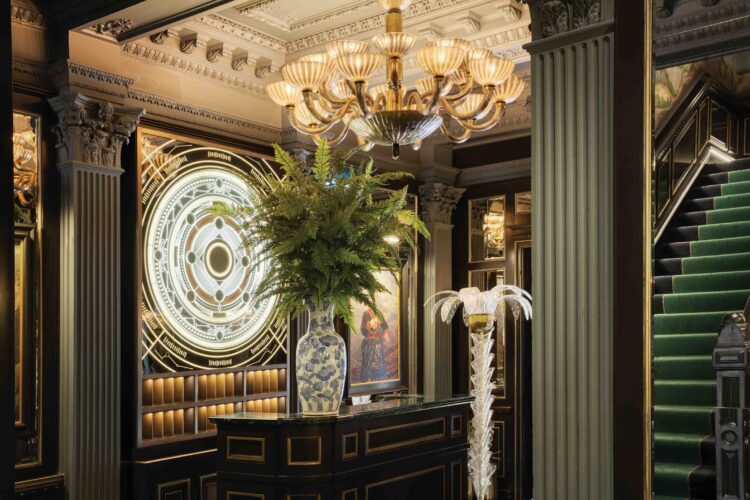
Part of getting there for the estate was the appointment of Rumour Has It Design, whose project list boasts some of the Cape’s leading wine farms, including Ernie Els Wines, Stellenzicht, and Alto. At Vergenoegd, the company worked on the entire homestead, Geuwels restaurant and wine tasting, the spa, its presidential suite, and the farmhouse lodge, as well as Clara’s Fine Dining & Barn.
“The vision for this project closely aligned with the principles of the European Heritage Project: to respectfully preserve and restore Vergenoegd’s original character while adapting it for modern use,” says CEO Analise de Beer. “The intention is not to create a museum, but rather a living environment – rooted in its history while evolving towards the future.”
Analise says that, from a holistic perspective, the design of heritage and contemporary hospitality destinations such as Vergenoegd Löw reflects a clear shift away from purely aesthetic spaces towards environments that offer meaningful, immersive, and emotionally resonant experiences.
“Guests are no longer simply seeking luxury in the traditional sense; they are drawn to spaces that feel authentic, grounded in place, and rich in narrative. In an increasingly digital and fast-paced world, there is a growing desire for connection to origin. Furthermore, there’s a movement toward intentional living and sensory depth, where environments allow for slowing down and engaging multiple senses.”
Looking to the Future
For visitors seeking exactly that, Vergenoegd Löw provides just such an island, continuing to build on its long and proud history of Cape wine.
For more information, visit vergenoegd.co.za.
IMAGES: SEAN GIBSON; SUPPLIED