Chaotic yet compelling, Marrakech is in a constant state of reinvention. The Los Angeles Times recently declared it ‘Africa’s New Capital of Cool’ – a distinction insiders have recognised for decades. Yet it’s not just the new crop of sleek design hotels, stylish bars, modern restaurants, and contemporary art events transforming Marrakech into a destination that attracts creative travellers – it’s the seamless collaboration with the timeless Moroccan classics that makes it irresistible.


The Red City’s Grande Dame
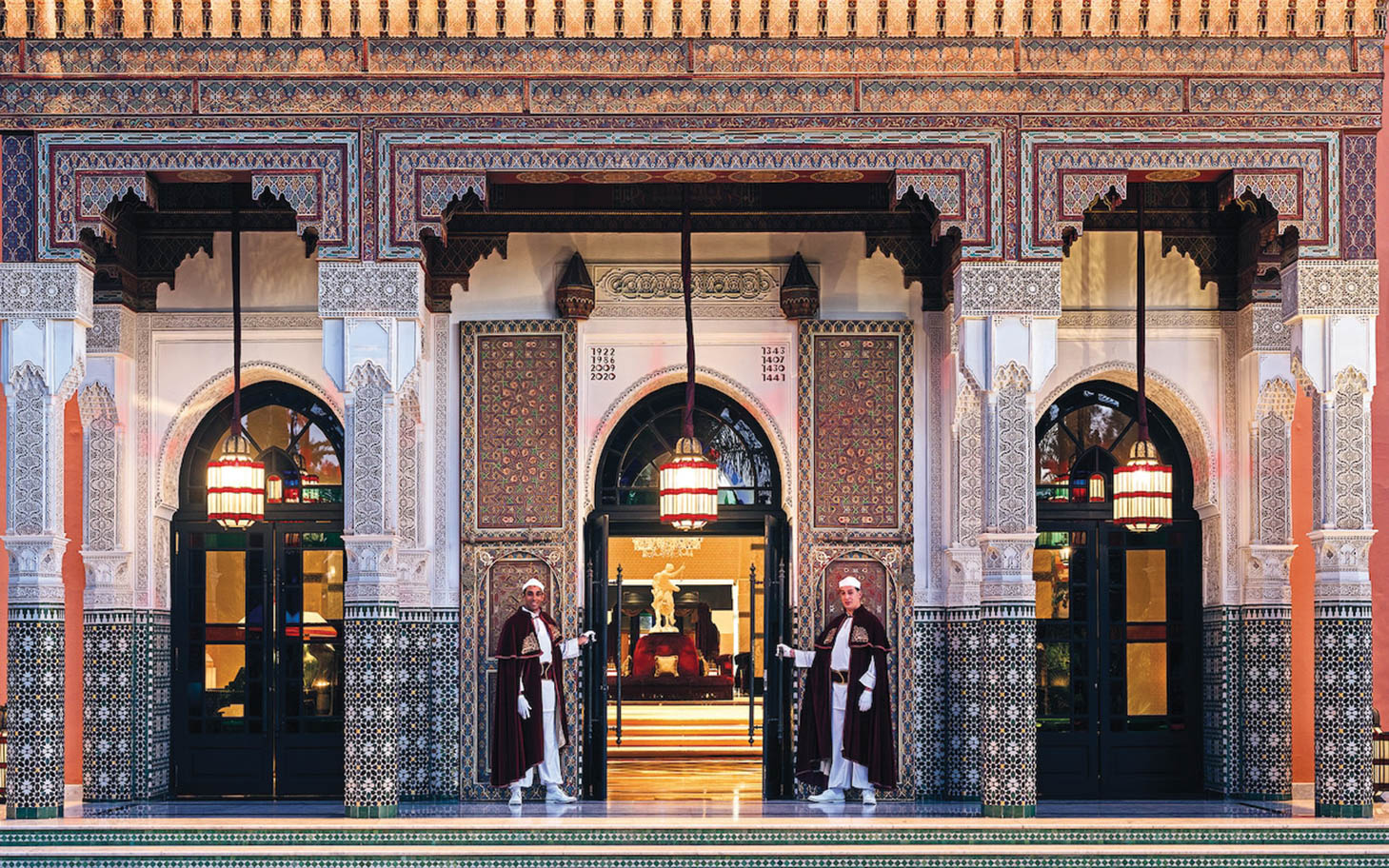
Since opening its doors in 1923, La Mamounia has remained one of the continent’s most celebrated hotels – an icon that feels both timeless and unmistakably now. Dating back to the 18th century with royal origins, the former palace and surrounding orchards blend traditional Moroccan architecture with Art Deco flair. Modern transformations and redesigns have cemented La Mamounia as an elite retreat and global icon.
Visiting Marrakech during February’s 1-54 Contemporary Art Fair and staying at La Mamounia – the city’s grande dame of luxury hotels – felt transformative. Surrounded by artists, collectors, curators, and cultural tastemakers, I found myself immersed in a celebration of Morocco’s creative vitality.


As essayist Pico Iyer once observed, “And if travel is like love, it is, in the end, mostly because it’s a heightened state of awareness in which we are mindful, receptive, undimmed by familiarity and ready to be transformed. That is why the best trips, like the best love affairs, never really end.”
In this heightened state of awareness, I fell in love with almost everything.
There was the seven-foot doorman in a fez and deep-red Akhnif cape; the monumental carved wooden doors; and the cool, dappled calm of the inside foyer. Inside, the hotel’s signature fragrance – an intoxicating blend of cedar, dates, and rosewood, known as Dattes – drifted through the corridors. Even today, spraying the final drops of the fragrance I carried home evokes a lasting Proustian memory. The rooms are exquisitely appointed, with calming desert hues, bedding in the highest possible thread count, dappled lighting, and delectable nibbles that seem to replenish themselves while guests are away.


A Global Table
Beside La Mamounia’s expansive pool, a relaxed restaurant serves elevated classics like club sandwiches and lobster rolls. Emblematic of the hotel’s art de vivre, the Pierre Hermé afternoon tea is a gourmet highlight with a devoted following. The pastry display is so exquisite that the creations seem closer to haute couture than confectionery.
For dinner, book ahead for the signature dining experience known as Le Marocain. Serving elevated Moroccan cuisine in an opulent riad-inspired setting, the experience begins with a stroll through the private gardens lined with olive trees, orange blossom, and succulents past ornate fountains.
The menu showcases refined interpretations of traditional tagines alongside contemporary signature dishes, many accessorised with threads of saffron.


Spices are taken very seriously here. Locally sourced cumin, prickly pear, and argan oil feature prominently, reflecting Morocco’s rich agricultural heritage. Argan nuts only grow in Morocco, and the oil can be used on almost everything, including the skin.
Then there’s the breakfast. Describing it as a buffet sounds gauche – it’s more like a banquet with artisanal breads, pastries, cold cuts, juices, seasonal fruits, and cheeses.

Afterwards, a leisurely stroll through the palace grounds leads naturally to the 1-54 Marrakech Contemporary Art Fair.
The greatest luxury offered by both La Mamounia and Marrakech is time itself: slow afternoons drinking sweet mint tea and orange-blossom cocktails, letting go of the pace of modern life. Marrakech knows how to slow down time – though the city’s energy is never far away.
IZZA – An Art Hotel
From this storied luxury, I ventured into the heart of the historic Medina, travelling by a carpet-lined tuk-tuk through a dense network of alleyways lined with piles of potatoes and oranges. I arrived at art hotel IZZA to meet Curator and Creative Director Aicha Benazzouz. Aicha’s walkabout included the IZZA art collection, gallery, and an overview of IZZA editions. Spread across seven interlinked riads, the hotel houses more than 300 artworks, including works by Hassan Hajjaj – often described as the Andy Warhol of Morocco for his role in bringing the country’s contemporary visual language to an international audience.


Lunch was served at Noujoum, IZZA’s award-winning rooftop restaurant, where a menu designed for sharing celebrates local produce and seafood sourced from Dakhla, Safi, and Oualidia. Meat is sourced from the local Rahmna’s Farm. The feast was so generous that I left with carefully packed leftovers for the long journey home from Morocco’s far north to the southern tip of Africa.
Marrakech’s appeal lies in its ability to honour the past while embracing the future. Rich in culture, creativity, and character, Morocco’s Red City remains one of Africa’s most exciting destinations.
IMAGES: OLIVER PILCHER; RETO GUNTLI; ALEX AZABA/UNSPLASH; SUPPLIED