A basketball court can be more than a place to play. It can become a canvas, a meeting place, and a source of pride – a space where creativity can flourish, and communities can come together.
That idea sits at the heart of Hennessy’s In The Paint initiative, which combines basketball and art to support local artists and transform community courts into vibrant public spaces. First launched in Montreal in 2021, the initiative has since expanded to markets around the world, including several across Africa.

The series looks beyond the finished artworks, putting the artists and their stories at the centre. Filmed on the very courts they transformed, each film brings an artist together with a cultural voice from their community for a conversation about creativity, identity, perseverance and belonging.
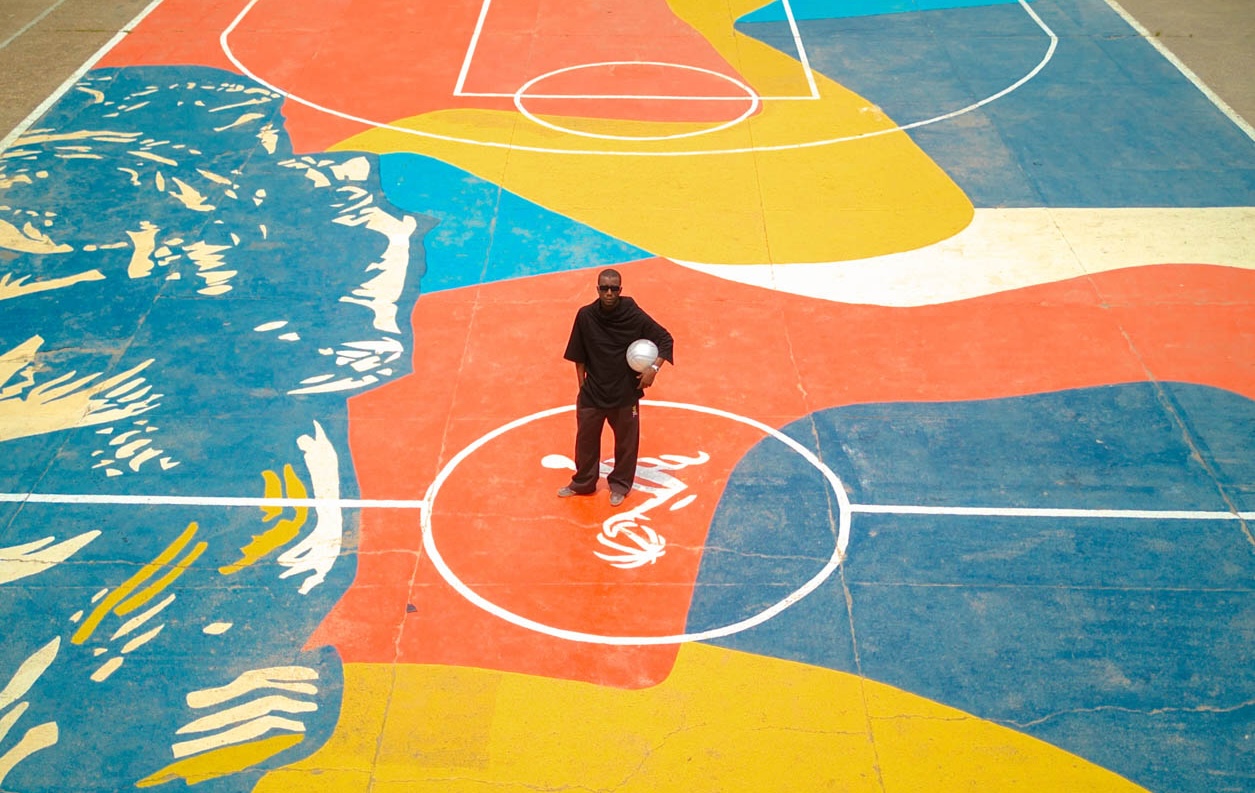
It is the people behind the paint who make the story particularly compelling. Across Nairobi, Dar es Salaam and Lagos, three artists reveal very different reasons for creating – from bringing optimism and togetherness into a neighbourhood to making cultural histories more visible and returning something meaningful to the place where it all began.
Kenya – Kevin Esendi

For Kenyan artist Kevin Esendi, the answer begins with colour, energy, and optimism.
Kevin painted the Camp Toyoyo Jericho Court in Nairobi, transforming the space with a visual language that brings vibrancy to its surroundings. But his ambition goes beyond aesthetics.
“I just want to show good vibes, show vibrancy within the culture,” he says. “There’s so much negativity in the world. For an artist, it is better that you stay positive, so people see something to look forward to.”
For Kevin, art has the power to shift the mood of a place. He describes enjoying the process of applying colour and adding “a bit of beauty here and there”, while striving to “create pieces that evoke emotion” and “bring change”.
The court itself has become part of that change. “The court has brought a lot of talent out of it,” he says, describing how people now gather there “to bring that togetherness for the community”.
It is a reminder that public art need not sit behind gallery walls to have cultural value. Sometimes, its greatest impact is felt in the everyday places where people meet, play and grow.
Tanzania – John Odul

In Dar es Salaam, Tanzanian artist John Joseph Odul approaches his work through the lens of history and cultural visibility.
John created the artwork for the Spiders Community Court, drawing inspiration from Tanzania’s heritage and the communities whose stories he feels deserve greater visibility.
In Hennessy’s own account of the project, John described the artwork as an opportunity to pay tribute to contemporary African art and his Tanzanian community, creating a space where people could come together.
Speaking about his inspiration in the new film, John points to the history of the Chagga, Makonde and Hadzabe communities, whom he feels are “not being seen”.
His collaboration with Hennessy became an opportunity to translate that sense of cultural heritage into something tangible and lasting.


“Working with Hennessy was an impact into the community, to build something that would stay,” he says. “This was something I could do to create impact.”
The resulting court is more than a refreshed sporting facility. It is a contemporary canvas rooted in place, demonstrating how public art can bring cultural narratives into the spaces where communities live and gather.
Nigeria – Osa Seven
For Nigerian artist Osa Seven, the meaning of In The Paint is deeply personal.
When Hennessy commissioned him to transform the Park 23 basketball court in Festac Town, Lagos, he was returning to a place he had known since childhood – a court where he had played more than two decades earlier.
Speaking with host and actor Jimmie Akinsola, Osa reflects on the experience of returning to a place that had helped shape him.
“Playing here over twenty years ago, growing up in the community, seeing things or people who inspired us to want to be more, and coming back here years after to do this, is something I am proud of,” he says.

There is something beautifully circular about the story. A place that once gave a young artist inspiration becomes, years later, a canvas on which he can leave something of his own behind.
Osa’s artwork for the court draws on Nigerian cultural references, including the Benin Queen bronze head and imagery associated with FESTAC, the landmark Second World Black and African Festival of Arts and Culture held in Lagos in 1977. In doing so, it connects the community’s past with its present and future.
Art That Gives Something Back
Across the three films, the courts become a way of seeing Africa through the eyes of its artists.
For Kevin Esendi, art brings colour and positivity. For John Odul, it offers a way to celebrate cultural histories and communities that are often overlooked. For Osa Seven, it creates a bridge between childhood memories and the person he has become.

Their stories may be different, but they share an understanding of art as something that can exist beyond the individual artist – something that can be experienced, shared, and ultimately become part of a community.
“This initiative and film series is about far more than painting a basketball court,” says Aimee Kellen, Regional Marketing Director, Moët Hennessy Middle East & Africa. “They really are about providing the opportunity for these incredibly talented creatives to express themselves, to foster pride within their community and to share their talent with the world.”

That is perhaps the most interesting legacy of In The Paint. A court becomes a canvas. A canvas becomes a gathering place. And, over time, that gathering place can become part of a community’s cultural memory.
For Hennessy, it is another expression of its long-standing engagement with art and culture. For the artists, it is an opportunity to make something that remains. And for the communities that use these courts, it is a reminder that creativity can transform not only how a place looks, but how it feels and what it means to the people who call it home.