In these noisy times, Art Formes founder and art historian Olivia Barrell quietly introduced herself to me through her carefully considered, beautifully produced and intelligently written materials. Her passion for South Africa’s contemporary sculptural clay and ceramic tradition is evident in everything she shares.

Her book Clay Formes: Contemporary Clay from South Africa (published by Art Formes) became a South African bestseller, with critic Ashraf Jamal writing that it “reintroduced the art world to the vitality of ceramics.” Now, Art Formes — the country’s first gallery and publisher devoted to contemporary South African ceramics and sculpture — has opened a bricks-and-mortar space at Cape Town’s sought-after Old Biscuit Mill, a sure sign of a healthy and growing local art ecosystem.

YLA: What would you like to see done to support future leaders in the world of ceramics on the African continent?
Olivia: South Africa is home to some of the leading ceramic artists in the world — many of them unrecognised and unrecorded. This is, in part, because an understanding of ceramic technique and history is required to understand what these artists are doing and why it is significant. My aim, through much of the literature published by Art Formes, is to bring understanding of the complex medium and history of clay to general audiences — so that, in time, recognition will come to our ceramic masters. The works can be appreciated for their beauty alone, but they hold a different beauty and meaning when they can be fully comprehended in their technical innovation and historical relevance.


YLA: What sets Art Formes apart from other galleries specialising in ceramics or works in clay?
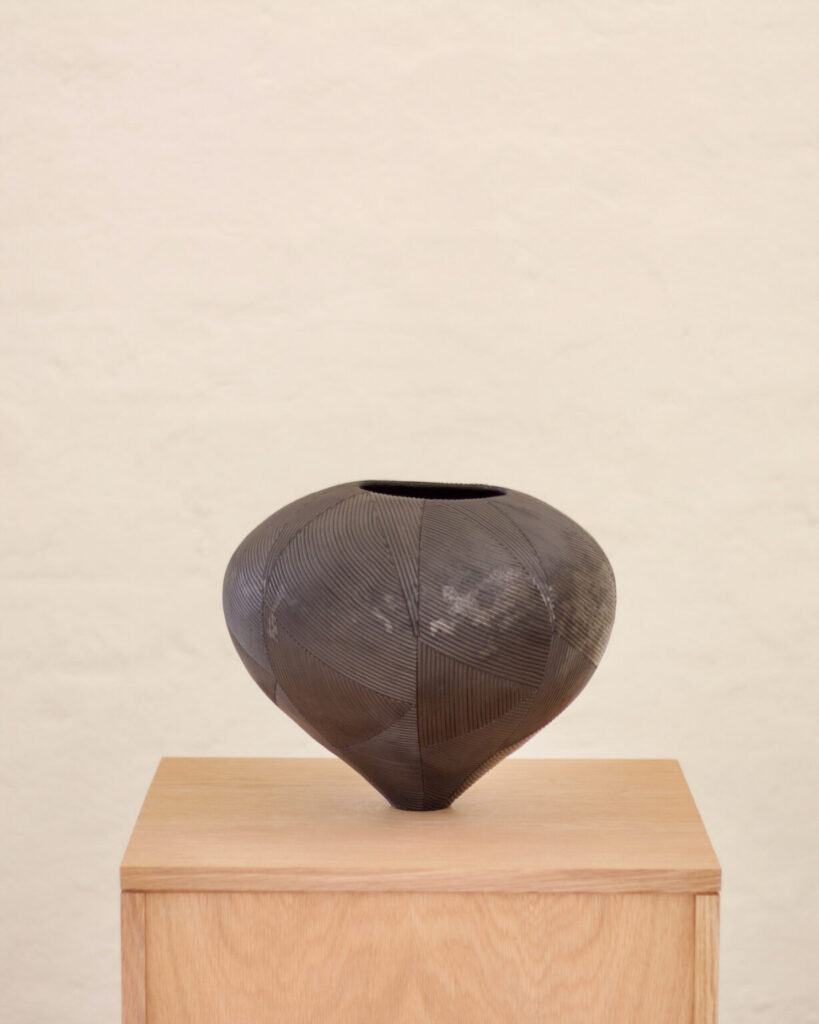
Olivia: There are hardly any other galleries worldwide, and none in South Africa, that specialise in clay. Without the understanding of what makes a ceramic work significant — technique, concept, and its insertion into the historical narrative of the medium — it is almost impossible to tell which ceramic works are significant and why. This is why ceramics remain marginalised within the contemporary art world; gallerists don’t have the expertise to know what makes a ceramic master and what does not. The one or two galleries in South Africa that showcase ceramics pass them off as design pieces — but to call our master ceramic artists ‘designers’ or ‘furniture makers’ is nothing short of sacrilege.

YLA: What role do you think Art Formes plays in the ceramics ecosystem?
Olivia: I think Art Formes has been instrumental in bringing more attention to the relevance of ceramics within the contemporary fine art world. This has been our intention from the beginning. Our publication, Clay Formes: Contemporary Clay from South Africa, was pioneering as it came out even before the recent trendy uptick in ceramics’ appreciation. The book made the bestseller list in South Africa within the year, and Ashraf Jamal said that Clay Formes “was one of the most important [books] published in 2023 — not least because it reintroduced the art world to the vitality of ceramics.” In addition to writing, I promote South African ceramics through lectures and panel discussions, both locally and internationally — so hopefully, this does its bit to contribute to the growing awareness of our ceramic masters.


YLA: How is Art Formes shaped by where we live and when we live?
Olivia: Art Formes is deeply anchored in the place that we live; it is dedicated to recording neglected narratives from this continent. Art Formes aims to show that clay is intrinsic to artistic expression in South Africa. And that it is impossible to remove ceramics from the contexts in which they are embedded. The material itself is deeply associative with the ways communities exist in this country, makingceramics one of our most ancient and revered art forms. Art Formes inserts itself into the present— amid global uncertainty and digital change — as an important reminder of the enduring value of ancient artistic traditions and objects meticulously crafted by the human hand. There is so much humanity, and such a depth of storytelling, in a single, hand-built artwork.