Heritage sites are not just for tourists exploring South Africa, but places locals can — and should — enjoy too. Updated Blue Plaques across the country now often include QR codes, offering opportunities to connect with indigenous and settler histories alike. Many sites are also blending conservation, technology, and immersive storytelling to create richer, more meaningful visitor experiences.

Precolonial and colonial heritage sites remain living reminders of the past while continuing to shape conversations about South Africa’s present and future. Here are five worth exploring.
1. !Khwa ttu
Just over an hour from Cape Town near Yzerfontein, !Khwa ttu is a San heritage museum, restaurant, cultural centre, and lodge set within an indigenous reserve overlooking sweeping Atlantic Ocean vistas.

The !Khwa ttu cultural precinct and heritage reserve has a long-standing relationship with San communities across Southern Africa. Besides visiting the museum and immersive cultural centre, guests can stay in the “Hilltop Huisies”, perched on a granite hilltop close to the cultural precinct, or in private “Fynbos Cabins” on rehabilitated farmland where indigenous fauna and flora have been reintroduced.
Dedicated to cultural restitution, the reserve is also restoring the surrounding landscape through the clearing of invasive alien plant species and the reintroduction of wildlife as part of a considered conservation strategy to create a precolonial sanctuary.
2. Iziko Bo-Kaap Museum
The Iziko Bo-Kaap Museum is a small museum set in a historic enclave of Cape Town’s Cape Malay community. Housed in one of the earliest homes built in the Bo-Kaap area, the building dates back to the mid-18th century.
Today, many visitors come to Bo-Kaap for the perfect Instagram shot, using the rainbow-bright row houses as a backdrop. Chiappini Street, apparently the most photographed street in the city, is nearby, as is Atlas Trading, Cape Town’s oldest spice store.
Don’t leave the area without trying a koe’sister, not to be confused with a koeksister. A koe’sister is a traditional Cape Malay pastry: a sweet, spiced dumpling served warm, soaked in syrup, and dusted with dried coconut. One of the best places to try one is at Biesmiellah restaurant.
3. Mostert’s Mill
Located near UCT’s upper campus, Mostert’s Mill is South Africa’s oldest surviving windmill. Built in 1796 on the historic Welgelegen farm, the mill has survived centuries of decline, restoration, and renewal, and was declared a National Monument in 1940.
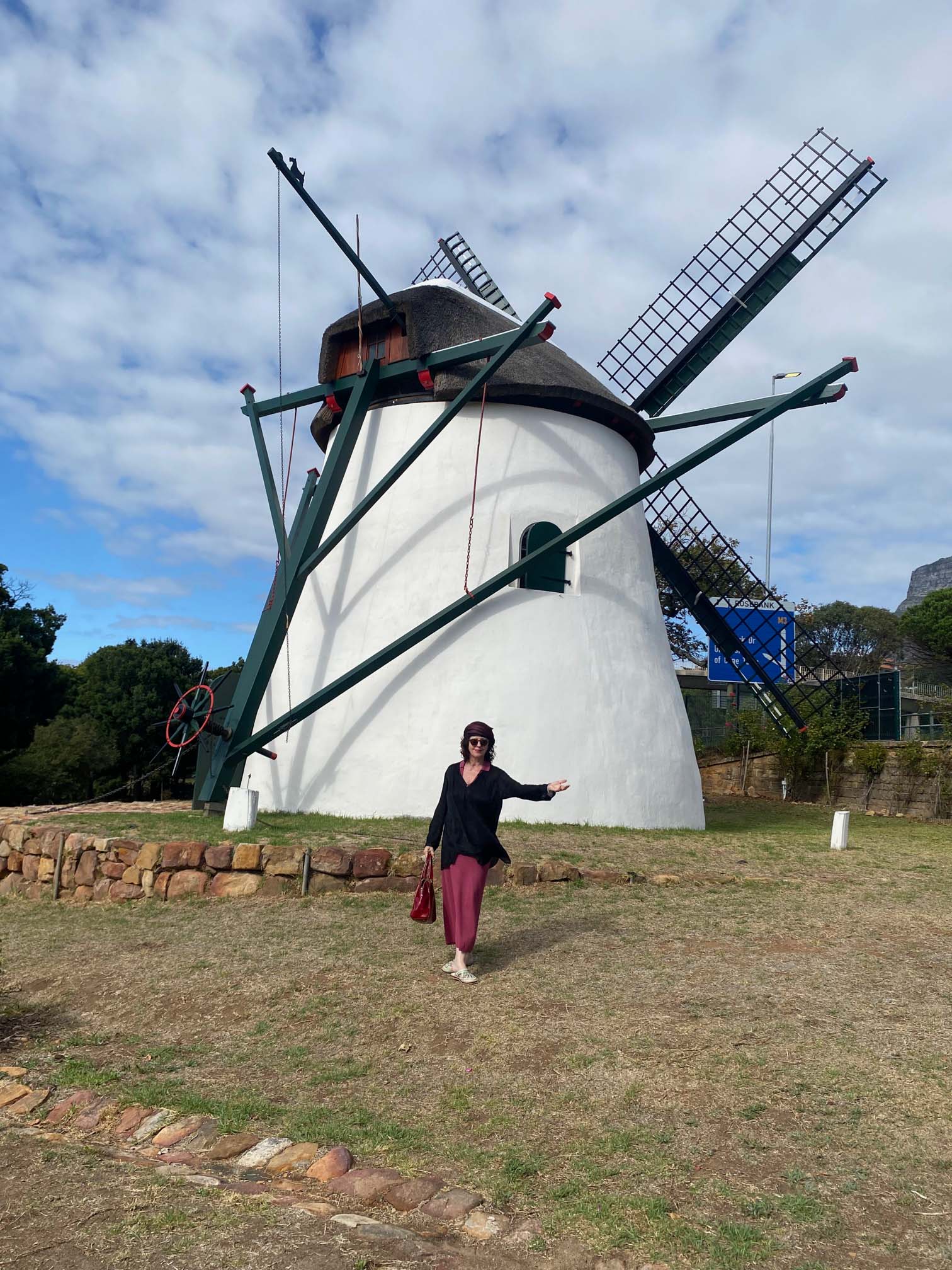
In the 1990s, Friends of Mostert’s Mill, Dutch millwrights, and Gabriel Fagan Architects fully restored the mill, returning it to working order. Then, on 18 April 2021, a fire that began on the slopes of Table Mountain destroyed much of the mill and its surroundings. With the working parts and floors made entirely of wood, only the cracked tower cone, the steel sail arms, and bits of ironmongery remained.
Friends of Mostert’s Mill initiated a community-driven project to restore the mill to full working order, with volunteers working around the clock to clear away the ashes and salvage surviving components.
By chance, during the COVID lockdown period, UCT’s Department of Geomatics had undertaken a point cloud survey of the mill only months before it burnt down — a development that proved invaluable to the rebuilding process. Apart from providing an accurate representation of the mill before the fire, the survey also supplied precise measurements of the timber machinery and structural elements, allowing specialist joiners to recreate every detail. Even the traditional miller’s emblem on the brake arm was refashioned.
4. Melville Koppies
Did you know that many of the koppies around Joburg were once dotted with settlements, many of which smelted iron? Melville Koppies is possibly the only place where you can still see one of these ancient smelters today.
From May 2026, visitors will be able to use their smartphones to view a 3D recreation showing how this smelter, last fired about 500 years ago, once operated. The project is the result of a collaboration between the UJ Metaverse Research Unit and the Friends of Melville Koppies.
New signage explaining that this site was one of many settlements of farmers, ancestors of Tswana and Sotho speakers, in the greater Johannesburg area from the 1300s, will also be installed. While the original artefacts are not kept on site, some can be viewed at the nearby Origins Centre.
“The new board and the AR video are drawing more people to have a look. We had Grade 11 geography students from a local high school this week. One of our guides was stationed at the smelter and told them briefly about the history and background of the smelter. Most of them had never even heard of Mzilikazi,” Melville Koppies chairperson Jenny Grice tells me.
Open Sundays, 8am–11.30am. Adults R100, under 18s R50, and under 5s free.
Guided tours can be booked on 072 348 0578 on Sunday mornings or during the week (minimum charge of R500 for tours outside Sunday mornings).
5. Toppieshoek Heritage Treasures
The Broederstroom Archaeological Site records the first arrival of Black African immigrants into the region, the ancestors of the majority of today’s South Africans who settled there and introduced iron smelting and other technologies to the area.

Contemporary South Africans can now visit the site thanks to the tireless efforts of many, including Magaliesberg Biosphere champion Vincent Carruthers. Recently, a Blue Plaque was unveiled acknowledging the site and the Early Iron Age immigrants who arrived as far back as AD 350.
The Broederstroom site reflects a momentous phase in South African history. Located on the southern bank of Hartbeespoort Dam, the 56-hectare property is owned by the Tshwane University of Technology. It is home to two remarkable examples of heritage: the early Iron Age archaeological site itself and the 20th-century Leiden University Observatory.
The nearby Magaliesberg mountain range has been home to humanity since the earliest stages of our existence. People from diverse backgrounds, professions, and cultures — hunters and explorers, kings and chiefs, soldiers and scientists, artists and archaeologists — have all threaded their lives into the fabric of the past and shaped the rich heritage of the Magaliesberg and the Cradle of Humankind.

Vincent Carruthers has recently preserved many of these histories in artefacts, oral traditions, literature, and legend, vividly portrayed through words and images in the book These are the People of the Magaliesberg: A Guide to Past Personalities. Almost 300 well-known public figures, alongside lesser-known individuals, are described and placed in historical context. Together, their stories make fascinating reading while also providing a valuable reference work.