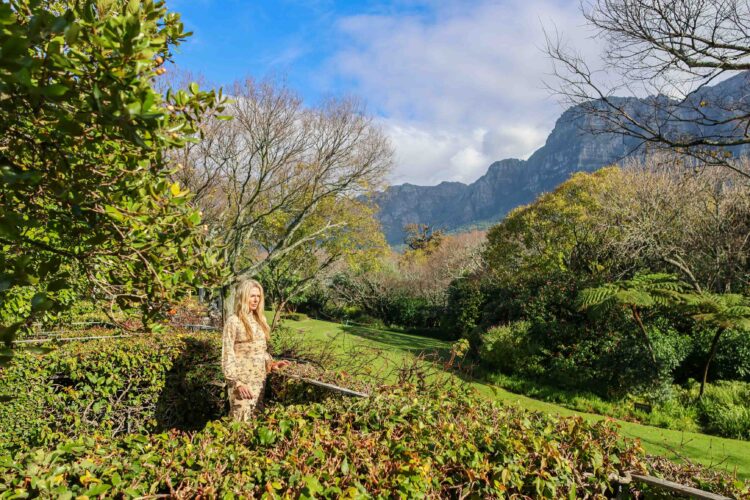
By now, most people in Cape Town have a Swartland opinion. It’s the wine, mostly – the Sadie Family devotees, the Mullineux pilgrimages, or Testalonga natural wine fans – the general sense that this is where the interesting bottles come from before the rest of the world notices. Fewer people, however, have realised that the same stretch of country, folded against the Atlantic an hour north of the city, is quietly becoming the West Coast’s answer to a proper escape. Here lies De Wildeveldt, one of the area’s best-kept secrets.


You’d be forgiven for driving past the property without realising it. There’s no grand gate announcing 2 000 hectares of protected renosterveld and sandveld, no signage competing for attention along the R27. Instead, a valley opens up almost without warning: wide hills, big skies, and a silence so complete it takes a moment to register as a sound in itself. This is land that has been left untouched for decades, and it shows: indigenous vegetation has regenerated, while invasive species have been methodically cleared, with the timber repurposed as firewood. It’s a custodial project years in the making before a single guest ever arrived.

That guest list, for now, is capped at 18. Veldt Haus Cottages and Thatch Haus are the two collections currently open, each newly renovated and built into the hillside above a wetland rich in birdlife, with Stilveldt Cottage and Reedsong House due to join them ahead of summer for families and larger groups. The design language across all of them is the same: barefoot luxury built by local hands, natural textures and generous proportions, with nothing shouting for attention. Contemporary South African art does the talking instead – mixed-media pieces chosen by the interior designer reflect the same restraint as everything else, alongside furniture and finishes by local artisans and designers. The brief to blend seamlessly into the landscape has been effortlessly achieved.


One of the focal points is the wood-burning fireplace, the sort of feature that turns a quiet evening into an occasion. A freestanding bath, deep enough to properly disappear into, is no small mercy after a day spent walking, riding or cycling across 2 000 hectares. But it’s the deck that does most of the convincing: each Haus has its own eight-metre pool for days when the West Coast sun means business, a wood-burning hot tub for nights when it doesn’t, and a sunken fire pit that makes it possible to watch the sun sink into the Atlantic Ocean without getting up from your seat.


The landscape, after all, would be impossible to compete with. Cape flower season famously runs between early August and late September, when the sandy soils of the West Coast erupt into a display of orange and white indigenous blooms, their bulb-rich detail rewarding those who slow down rather than drive past at speed. From the property’s lookout point, you can pick out the unmistakable silhouette of Table Mountain on the horizon, which is either humbling or slightly funny, depending on how recently you left the city. Either way, De Wildeveldt’s land stretches as far as the eye can see, and there’s something genuinely recalibrating about that scale of uninterrupted nature, particularly for anyone whose usual view is a neighbour’s boundary wall. To feel even more immersed in nature, the lookout point can be reached on horseback, by quad bike, by bicycle, or on foot via the farm road that winds gently through the veld.


Back at the homestead, the ocean performs its own version of the same trick, visible from the front deck beyond a skirt of lemon trees. Fruit from the property, as it turns out, ends up exactly where it should: in the kitchen, brightening whatever is being cooked that evening – or cooked for you, as private catering can be arranged. This kind of detail changes the texture of a stay as surely and warmly as the thread count does.

Although the accommodation is self-catering, the food and drink lean heavily into the region’s own supply chain, and rightly so – this is Swartland, after all, where good wine is less an occasional treat than a baseline expectation. Darling Cellars featured throughout our stay, though it’s worth saying the local wine scene is rich enough that naming one estate feels almost unfair to the rest. Honey harvested from the farm’s own bees was available, along with a selection of local treats and produce. Together, they reinforced the sense that everything on the table had a traceable, local origin. For guests disinclined to leave the deck at all, in-villa wine tastings and massages can both be arranged on request – proof that staying in is treated here as seriously as going out.


It’s worth leaving the property too, if only because the surrounding towns are doing something interesting of their own.
Darling, around 20 minutes away, is Swartland’s most improbably characterful small town – home to Evita se Perron, the railway station turned cabaret theatre created by satirist Pieter-Dirk Uys, still very much a local fixture, and a reliable introduction to Darling’s famously warm hospitality.
Darling Brew’s tasting room is worth visiting in its own right, while the wine estates multiply the closer you look. Yzerfontein, closer still, offers long beach walks, and Rosemead Artisan Bakery is well worth planning your morning around.
Word travels fast once the flowers are out and a landscape this expansive tends not to remain a secret from the people who value the wide sanctuary of nature. For now, though, De Wildeveldt exists in that rare window – proportionately wild, properly considered, new with all the luxury you could need, yet genuine, grounded, and honest.
Book direct via dewildeveldt.com.