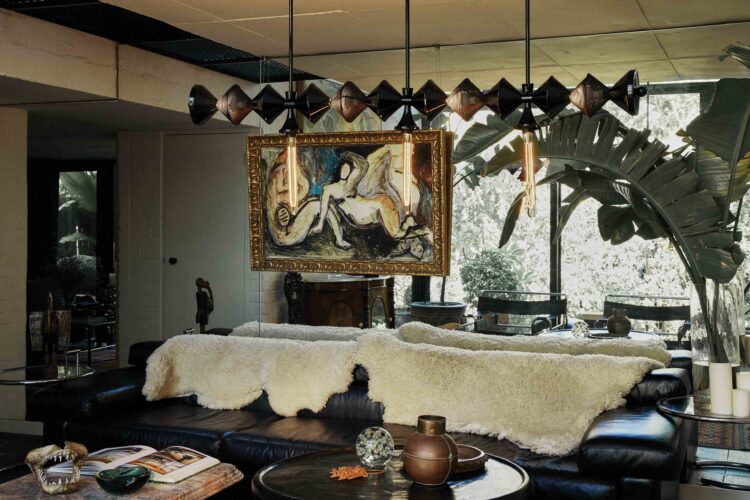
In an industry often influenced by fleeting trends and social media aesthetics, Blaque Pearl Lifestyle (BPL) has built its reputation on something more enduring: designing spaces that improve the way people live and work. Established in 2014 after founders Zimkita Sidumo and Siyabesho Thutha transformed a shared passion into a profession, the studio has grown into a multidisciplinary interior design practice specialising in bespoke residential, commercial, and workplace interiors.
As BPL celebrates 12 years of shaping South African interiors, the duo shares how they built the business, navigate working together, and why the future of luxury design is becoming increasingly personal.


From Passion to Profession
YLA: What first drew you to interior design, and how did your paths eventually converge to build BPL?
BPL: Design has always been part of our lives, long before we realised it could become a career. Growing up, we were both surrounded by beautiful interiors and family members who appreciated well-designed homes. Those early experiences sparked a fascination with furniture, décor, and architecture.
Initially, we pursued careers outside the design industry, but the passion never disappeared. We found ourselves advising friends on their homes, decorating our own spaces, and spending time exploring furniture and décor stores.
Eventually, we decided to formalise that passion by enrolling at Inscape Design School, where we completed our studies while balancing full-time careers and laying the foundations for a new business. By the time we graduated, we had the confidence to establish BPL.


Designing Around the Client
YLA: BPL was founded on the idea of incorporating lifestyle into design. What does great design mean to you?
BPL: Great design happens when aesthetics and functionality are perfectly balanced. Before we begin thinking about colours, furniture, or finishes, we spend time getting to know our clients. We conduct an in-depth client analysis to understand how they want to feel in the space, how they want to use it, what inspires them, and what practical requirements they have.
People often think interior design is simply about making a room beautiful, but the lifestyle of the client has to be reflected throughout the space.
Whether someone draws inspiration from fashion, architecture, travel, or art, those influences become part of the design language. That’s where lifestyle and design truly meet.
Building a Creative Partnership
YLA: How have you made your creative partnership work for more than a decade?
BPL: One of the reasons our partnership is successful is because we’ve learnt to appreciate our different creative voices rather than compete with them. Initially, we collaborated on every design, combining our styles into one vision. As the business has grown, we’ve allowed each other greater creative independence with individual clients. We still consult one another regularly, brainstorming ideas and sharing perspectives whenever needed. Good communication and mutual respect have always been central to our working relationship.
YLA: Does your approach change between residential, commercial, and workplace projects?
BPL: The fundamentals remain the same because every project begins with understanding the client and the brief. What changes is how those ideas are translated into practical solutions.
Commercial environments often come with stricter requirements. They need to reflect corporate identity, accommodate high traffic volumes, and prioritise durability and functionality. Residential projects are far more personal because clients are inviting us into their homes. They tend to be more emotionally invested in every decision, and naturally so, because these are the spaces where they live every day.
Regardless of the project type, we want every space to engage the senses and create an experience for the people who use it.


The New Meaning of Luxury
YLA: What changes have you noticed in how South Africans approach interior design today?
BPL: Clients are becoming increasingly intentional. They’re looking beyond trends and investing in pieces that will last. We’ve also noticed a growing appreciation for sustainability through upcycling, repurposing existing furniture, and choosing natural materials over synthetic alternatives.
Colour palettes have also shifted away from cooler greys towards warmer neutrals such as taupe and beige, creating spaces that feel softer and more inviting.
Lifestyle has also changed dramatically. More clients request multifunctional rooms, wellness spaces, reading corners, and areas designed simply to pause and unwind. Homes are expected to work much harder than they did a decade ago.
Designing for What Comes Next
YLA: What projects are you most excited about at the moment?
BPL: We’re fortunate to be working on projects that demonstrate just how varied interior design can be. We recently completed a corporate office transformation where the brief was to create a workplace employees genuinely wanted to return to. Introducing colour, greenery, artwork, and sculptural elements completely changed the atmosphere.
On the residential side, we’re enjoying projects at opposite ends of the spectrum. One involves creatively upgrading a bachelor apartment with a conservative budget, while another is an elegant luxury home featuring a carefully curated mix of bespoke and sourced furniture.
Perhaps one of the most meaningful projects we’re currently involved in is redesigning a radiation oncology centre. Knowing that thoughtful design can contribute to a calmer, more reassuring experience for patients reminds us that interiors have the power to influence wellbeing as much as aesthetics.
YLA: How do you create interiors that feel contemporary but remain timeless?
BPL: We don’t design around trends because those inevitably change. Instead, we focus on creating strong foundations that can evolve. Furniture that can be refurbished or reupholstered has greater longevity.
Every room also benefits from a timeless anchor piece that immediately draws your attention and remains relevant regardless of changing fashions. Because every project begins with the client rather than trends, no two interiors are ever the same. That’s what ultimately gives each project longevity.
YLA: What makes a space feel luxurious?
BPL: It’s about the atmosphere you create rather than the objects you place in a room. We think about how a space feels as much as how it looks. Texture, natural light, airflow, comfort, sound, and even scent all contribute to the overall experience.
Layering different materials creates warmth and depth, while thoughtful spatial planning allows furniture to breathe and people to move comfortably through a room. You can have the most beautiful furniture in the world, but if the space doesn’t function or doesn’t make people feel welcome, it loses its sense of luxury.
YLA: What’s next for BPL?
BPL: We’d love to establish an interactive showroom that brings together artists, textile designers, and industry collaborators, while also developing an online platform that makes professional design services accessible to a much broader audience.
We’re also exploring the creation of a signature furniture and accessories collection while continuing to expand our commercial portfolio. Beyond the business itself, we’re passionate about contributing to the industry’s future by supporting and mentoring emerging design entrepreneurs.
10 Design Essentials from Blaque Pearl Lifestyle
1. Spatial planning
Start with how the space needs to function, and let that inform its layout, scale, and furniture.
2. Lighting
Use natural light, lamps, and downlights to transform the mood of a space.
3. Window treatments
Help define the character of a room. Curtains envelope a room and make it feel cosier, whereas blinds offer a minimalist or functional feel.
4. Layering
Mix a variety of textures to create a more polished space.
5. Intended use
Design for how a space will be experienced, whether it’s a bedroom, doctor’s office, or hotel lobby.
6. Comfort
Upholstery, cushions, and soft furnishings make a space inviting.
7. Texture
Tactile elements give a space depth, from TV units and sideboards to coffee and side tables.
8. Colour, pattern, and print
Add character through wallpaper, rugs, and scatter cushions.
9. Art
Use prints, canvases, and artworks to anchor a room.
10. Materials
Timber, marble, metal, and other finishes define the feel of the space.