

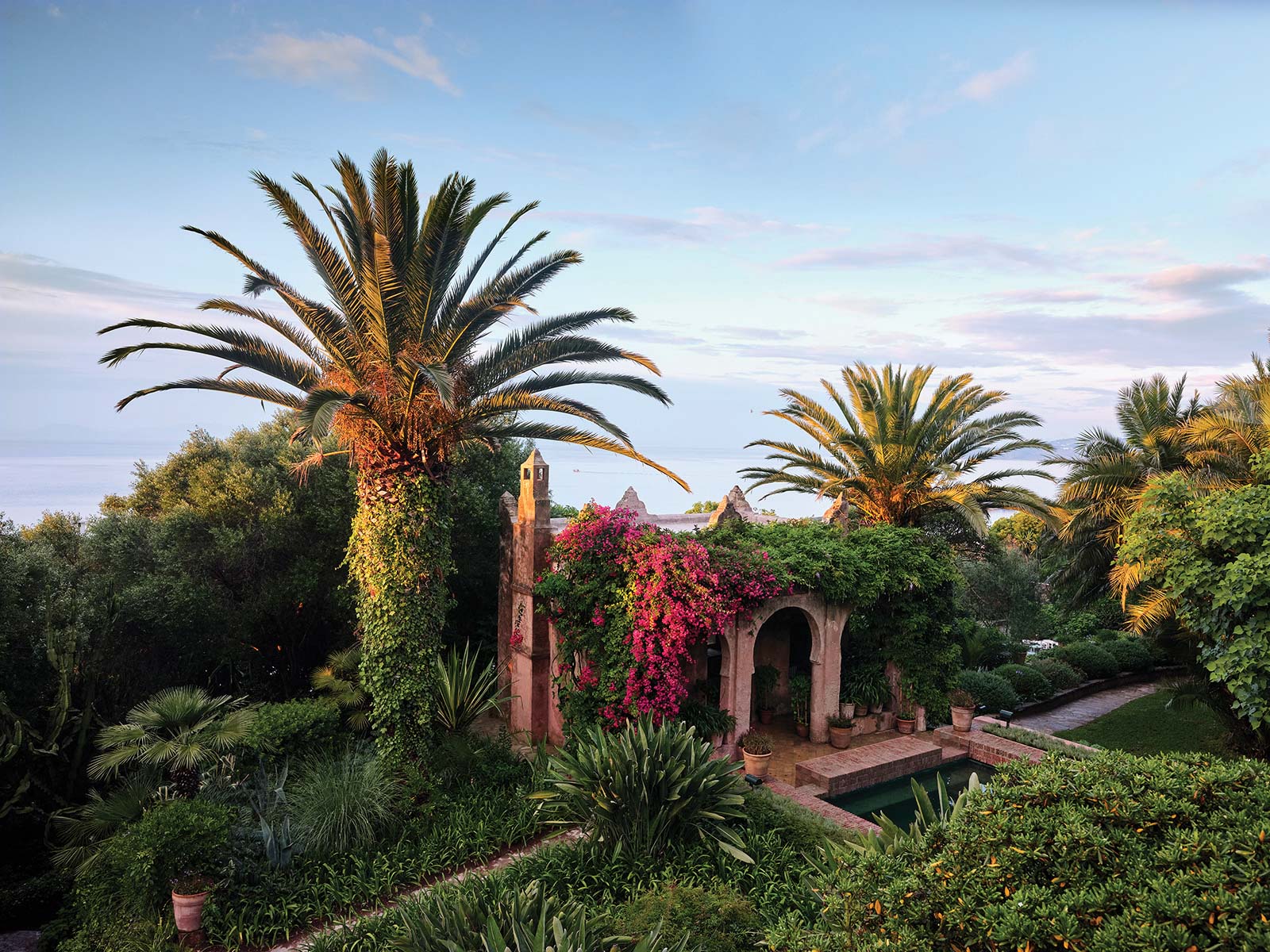
Villa Mabrouka, Tangier, Morocco
British designer Jasper Conran may have bought Yves Saint Laurent and Pierre Bergé’s Tangier holiday home on a whim, but he instantly knew he was going to transform it into a small hotel – one that would not only honour the home’s eclectic nuances but also seduce travellers with its understated glamour.


Jasper reflects that stepping off Tangier’s narrow, busy streets into the villa’s shady courtyard “full of banana and palm leaves before emerging into an oasis of big, sweeping lawns and an incredible garden looking out to sea” could be likened to a feeling of being in paradise.
Indeed, sitting under lime green umbrellas by the pool among rows of pink hydrangeas and bougainvillaea, or sipping sunset negronis on the rooftop terrace, feels utterly sublime.

Overlooking the Strait of Gibraltar and the North African Sea and set in one of Tangier’s largest – and lushest – gardens, Yves originally wanted the home to reflect his childhood days in Oran, Algeria.
“The theme was an eccentric 1950s Englishman who had come to live in Tangier,” says French interior designer Jacques Grange, who worked closely with the fashion icon on the home. “Yves wanted chintz and one colour per room. It was like decorating a house for characters out of a play by Tennessee Williams.”
You are walking into a Mediterranean house with the gentle nuances of Morocco”
While Villa Mabrouka needed infrastructure upgrades, Jasper preserved the look and feel of the original home, with meticulous details echoing the clean lines and simplicity of its 1940s architectural narrative. He describes himself as a custodian of the house, while infusing it with “the quiet eccentricities and traditional service of an English country house, and the yesteryear romance of the Riviera’s golden era of travel in the early 20th century”.


Nine new buildings were developed on the property before it opened in 2023. The hotel’s 12 suites retain their original layout, high ceilings, and handmade tiles. The colour palette masterfully balances shades of ochre, green, and dusty pink with crisp white while layers of Mauritanian rugs, embroidered textiles, mother-of-pearl marquetry, velvet chairs, mid-century lamps, Venetian sconces, and Roman mosaics add depth and texture. The custom-made furniture, tableware, and linens were designed by Jasper and made locally in Morocco.

New restaurants and a bar recently opened at the hotel, and there are three exquisite pavilions for private dining. The menus, like everything else at Villa Mabrouka, reflect its beauty and its colourful past.

“My aim was to protect the magic of both the house and its ravishing gardens,” Jasper says. “It has been a conservation and preservation project as much as a design one.”
Ritz Carlton Masai Mara Safari Camp, Kenya
Ritz Carlton’s new Masai Mara Safari Camp – an ultra-luxurious lodge set among the treetops along the banks of the Sand River – is the hotel group’s first venture into the luxury safari. Opened this August, it marks a new chapter in design-led safari hospitality.
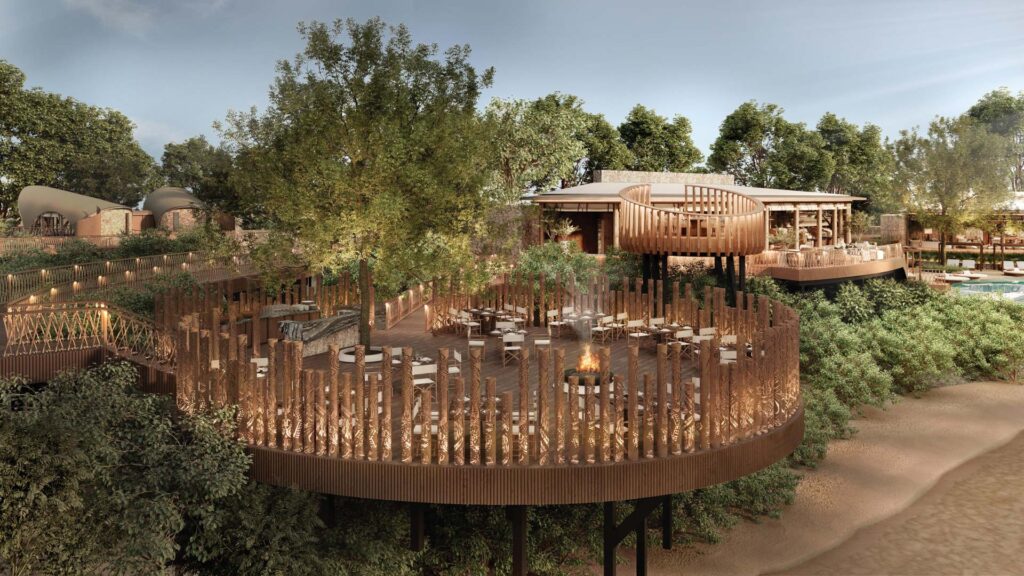
Tasked with bringing this vision to life, international firm LW Design Group, known for creating some of the world’s most iconic destinations, used biophilic principles to blur the lines between lodge and landscape, sophistication and authenticity.
“Every stitch, every surface, every spatial gesture is part of a larger narrative,” says Pooja Shah-Mulani, Creative Managing Partner at LW Design. “We’re not building lodges on the land; we’re building stories with the land.”
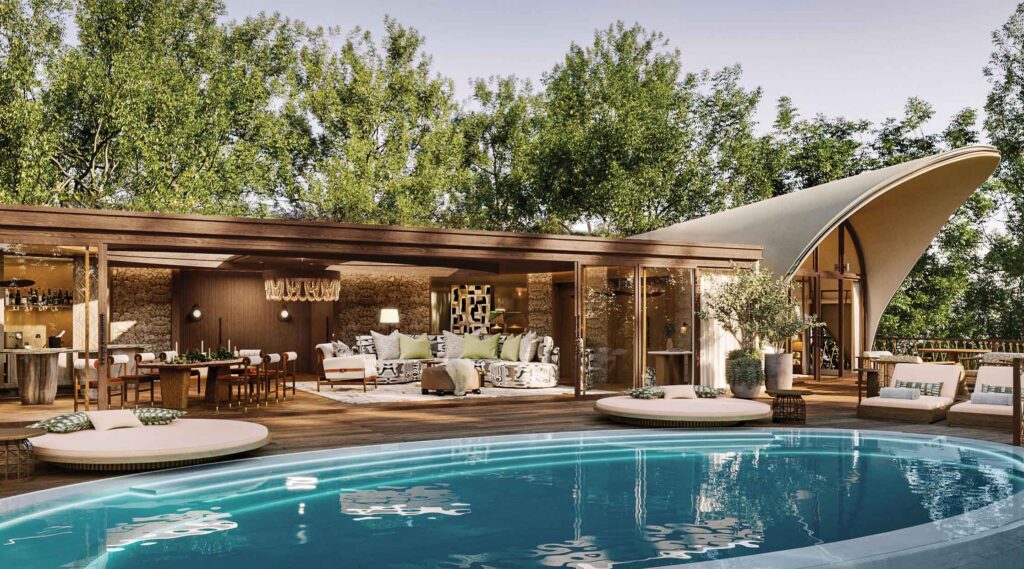
The camp was purposely elevated three metres above the ground to protect against seasonal flooding and limit impact on the land, while providing canopy-level vantage points.
We’re not building lodges on the land, we’re building stories with the land”
Each of the 20 suites delivers an immersive safari experience, with sunken lounges, private plunge pools, and indoor-outdoor bathrooms. -up canvas walls invite natural light inside, along with the birdsong and sounds of the wild, blurring the line between interior and landscape.

Every piece of furniture and joinery was made locally; textiles were woven on hand looms by artisanal women, and Kenyan artistry is on display throughout the lodge. Solar power and rainwater harvesting systems also ensure minimal impact on the natural environment.
With a subterranean wine cellar and an elevated stargazing deck, dining experiences have also been carefully considered within the design language of the Masai Mara’s newest safari sanctuary.

Masai Mara Safari Camp is a prime location to see the annual Great Migration and can be captured on complimentary Canon cameras that are available for use during stays.
Grays Eden Sanctuary, Maun, Botswana
Arriving at Grays Eden Sanctuary in Maun feels like stepping into a lush oasis on a scorching day. This is exactly what the owners, Sam and Sandrine Morris, envisioned when they purchased a piece of land overlooking the Thamalakane River, in partnership with Ker & Downey Botswana, which manages and markets the property.

“Grays Eden holds a very personal meaning for us. The name is inspired by our two children, Grayson and Charlotte Eden. We wanted it to reflect a peaceful, beautiful paradise where guests can feel at home,” says Sam.
The first luxury boutique hotel in Maun, Grays Eden serves as a gateway to the Okavango Delta. Lounging by the 12-metre pool built into the cliff face overlooking the river, is a delicious taster – and a sweet ending – for travellers heading to and from their safaris.


With just five villas and seven cottages, guests feel like they’ve been wrapped in luxury that is gentle, understated and soothing. “The aesthetic blends soft, minimalist modernity with organic, nature-inspired forms,” says Walter Smith, Sales Director at Ker & Downey Botswana. “It’s an open, peaceful ambience that mirrors the sense of space found in the African wilderness.”

High thatched ceilings and tall archways add volume and flow, and expansive windows fill the rooms with light and air. The interior palette is a gorgeous calming blend of light blues, soft whites, and natural browns coupled with wood and wicker. A large and inviting veranda features a white latte ceiling and laid-back furnishings dotted with pops of fuchsia bougainvillaea.
Another key design point at Grays Eden is the incorporation of the five elements, whether dining riverside by the fire, tasting wines in the private cellar or surrendering to the spa.

“The sanctuary’s design intentionally nurtures all senses and fosters balance: the light-filled spaces, gentle curves, and organic materials evoke calm and inspire a true feeling of escape,” says Walter. “It’s the contrast of refined luxury and organic beauty that stays with our guests long after their journey ends,” he adds.


